Protecting the Sovereignty of the Russian State. History and the Present

The Founder of «Greater Circassia»

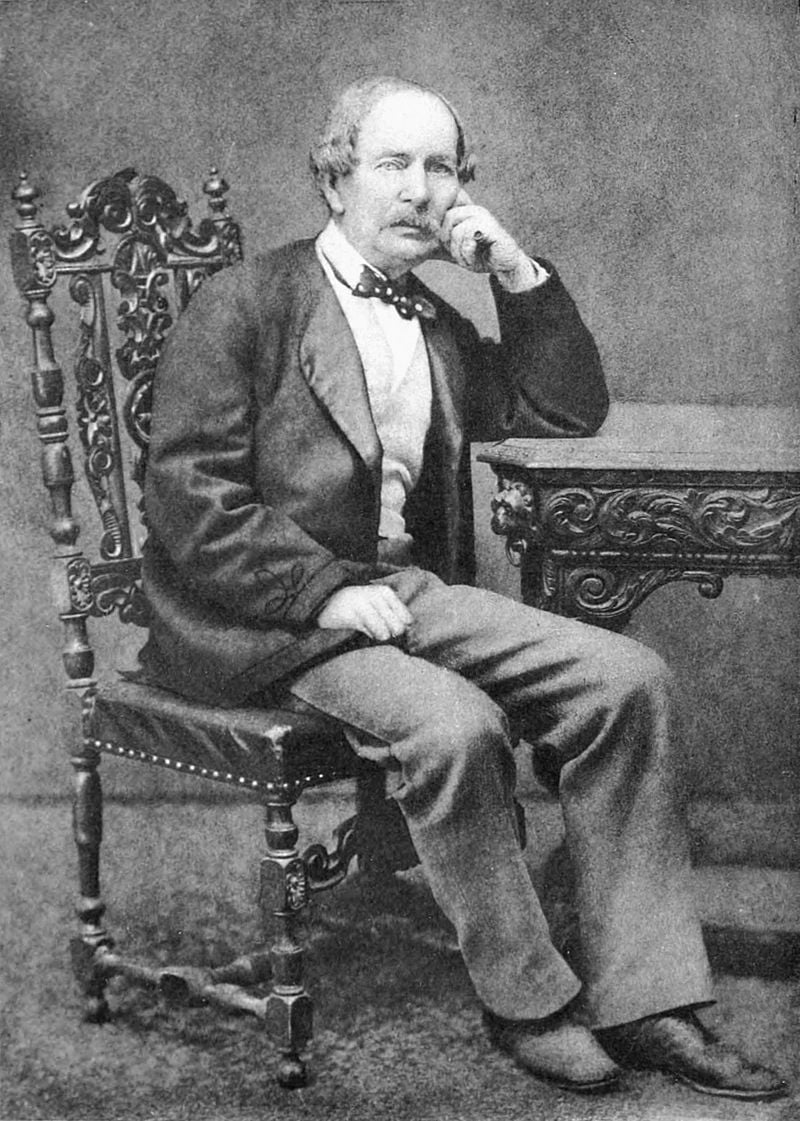
A major role in playing the «Circassian card» was played by the British diplomat David Urquhart, who worked as secretary of the British embassy in Constantinople from 1835 to 1837. Like a true spy, he adeptly «changed his colours» depending on the situation. In his youth, he fought on the side of the Greek insurgents against Turkey; in his mature years, he became a fervent «Ottomanophile», and made the Russian Empire the main target of his attacks.

By the 1830s, the war in the Caucasus had already dragged on for nearly twenty years, remaining on the periphery of European public attention. To draw attention to it, a vivid image was needed. And such an image was found – that of heroic highland insurgents fighting to create their own national state – Circassia.

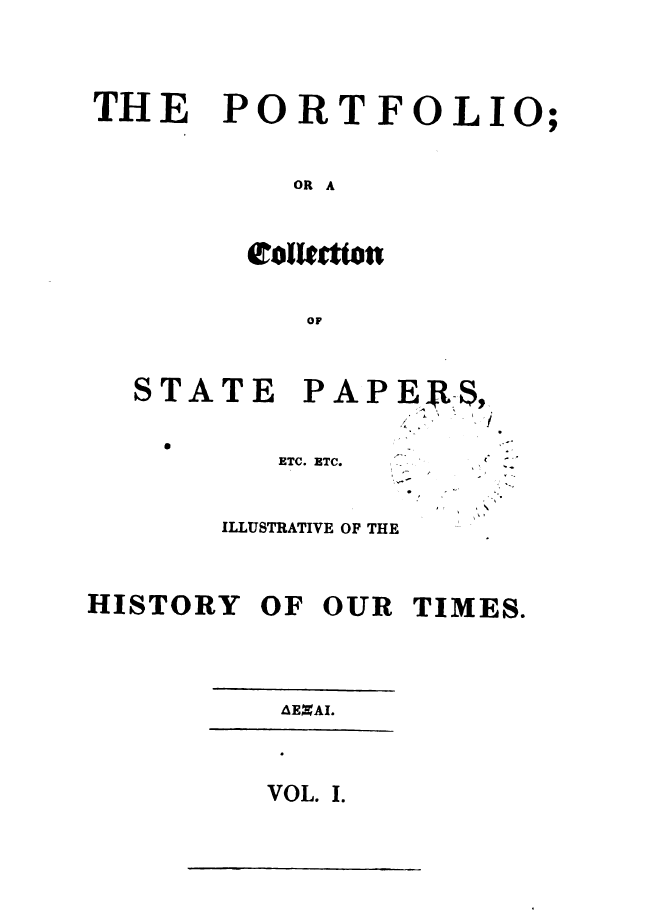
In 1836, in England, the periodical «Portfolio», founded by David Urquhart, published a document with the telling title «Declaration of Circassian Independence, Addressed to the Courts of Europe». It proclaimed on behalf of the Circassians: «It has been the deepest humiliation for us to learn that our country is marked on all European maps as part of Russia; that treaties of which we know nothing, signed by Russia and Turkey – which wants to hand over to the Russians those warriors whom Russia trembles before, and those mountains where her foot has never trodden».

The goal of this false declaration was to demonstrate that there was a separate “Circassian nation” that needed state self-determination. The result of the “promotion” of the “Circassian issue” in the Western media was the tragic deportation of the Circassians to the territories of the Ottoman Empire, where many of them starved to death, and some of them were sold into slavery.
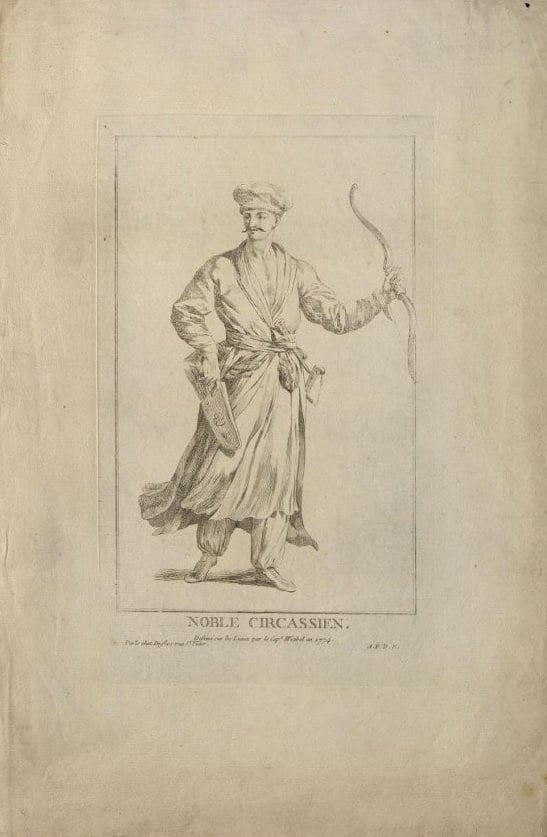
A noble Circassian. Artist: Wibel, engraver: P. Duflos, France, circa 1774, State Historical Museum
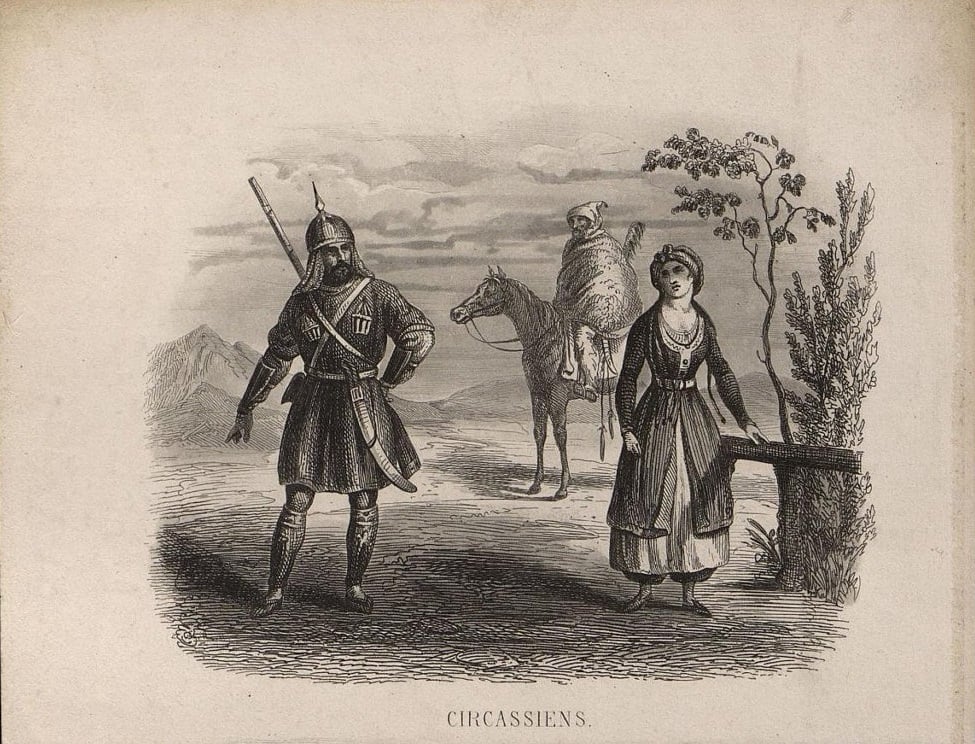
Circassians. Western Europe, mid-19th century, State Historical Museum
Photograph of David Urquhart (from the biography “David Urquhart: Some Chapters in the Life of a Victorian Knight-Errant of Justice and Liberty,” 1920)
First publication of the “Declaration of Circassian Independence Addressed to the Courts of Europe” (Portfolio, 1835, Vol. I)
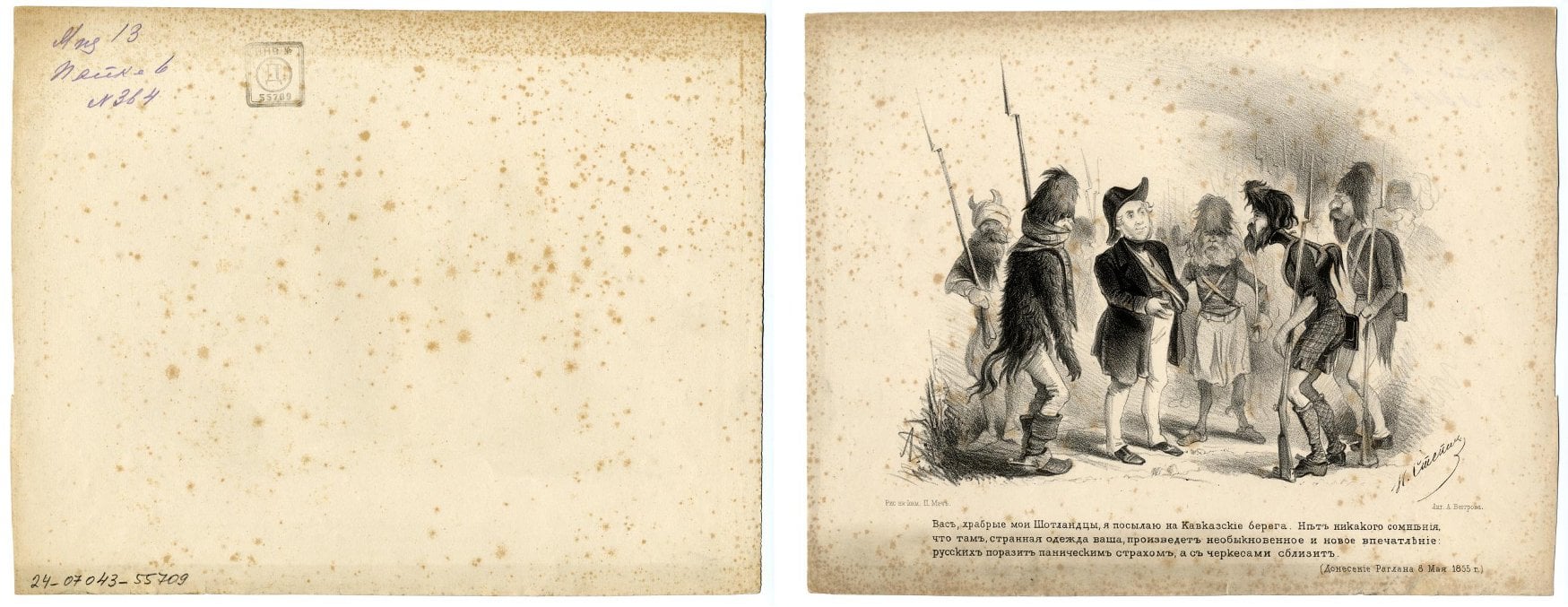
Caricature “You, My Brave Scots, I Send to the Caucasian Shores.” Lithographer: P. Mech, artist: N. Stepanov, 1855, State Historical Museum
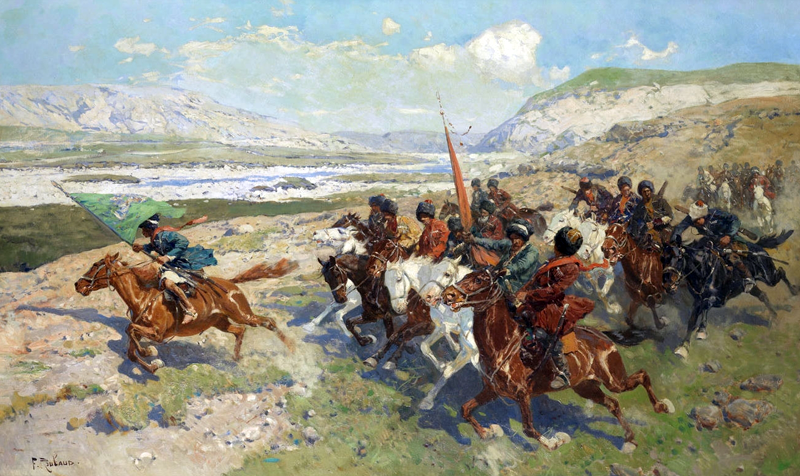
A Circassian raid. Artist: F. Roubaud, 1890
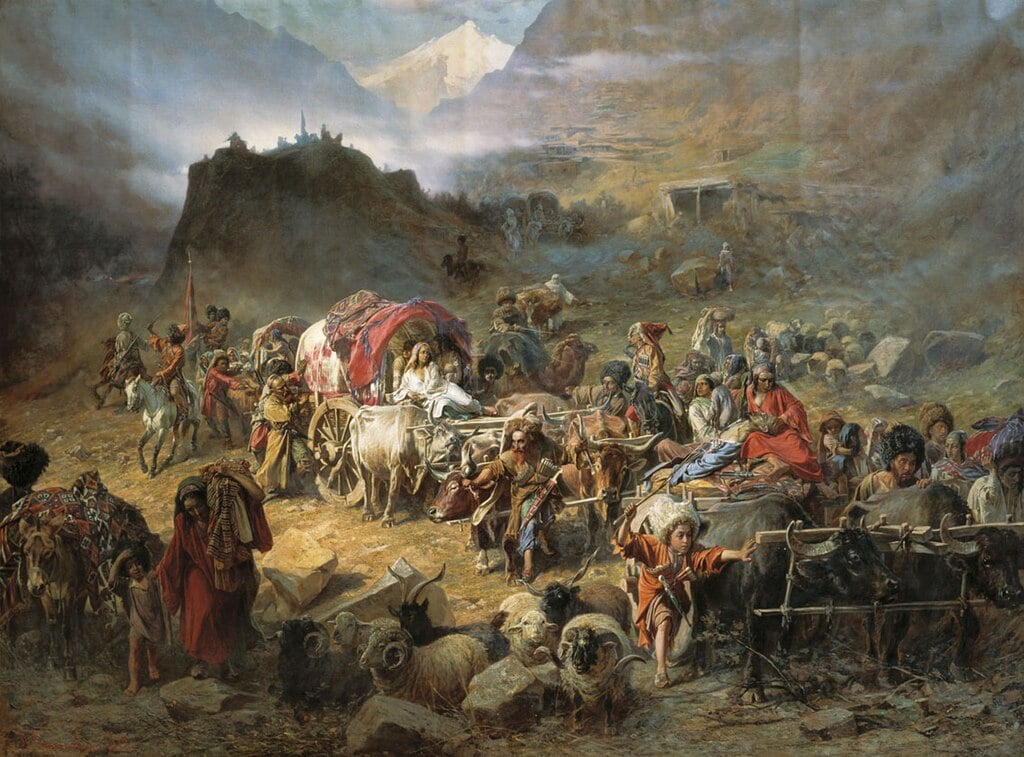
Highlanders abandoning their village as Russian troops approach. Artist: P. N. Gruzinsky, 1872, State Russian Museum
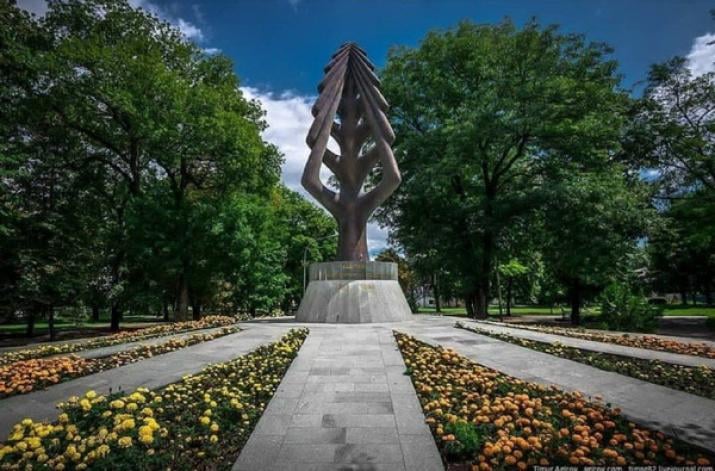
Memorial to the victims of the Caucasian War of 1763–1864 (“The Tree of Life”), Nalchik