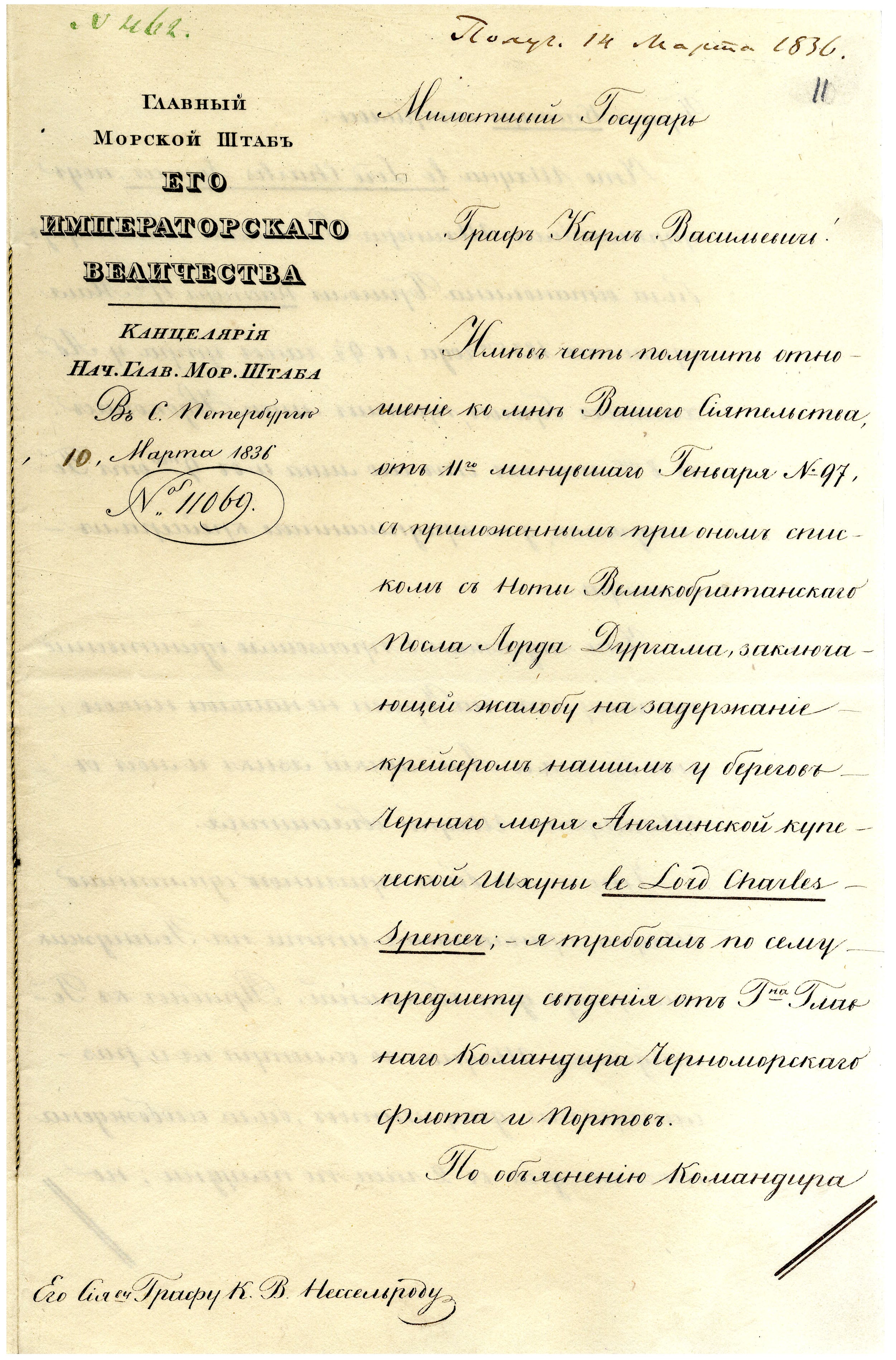
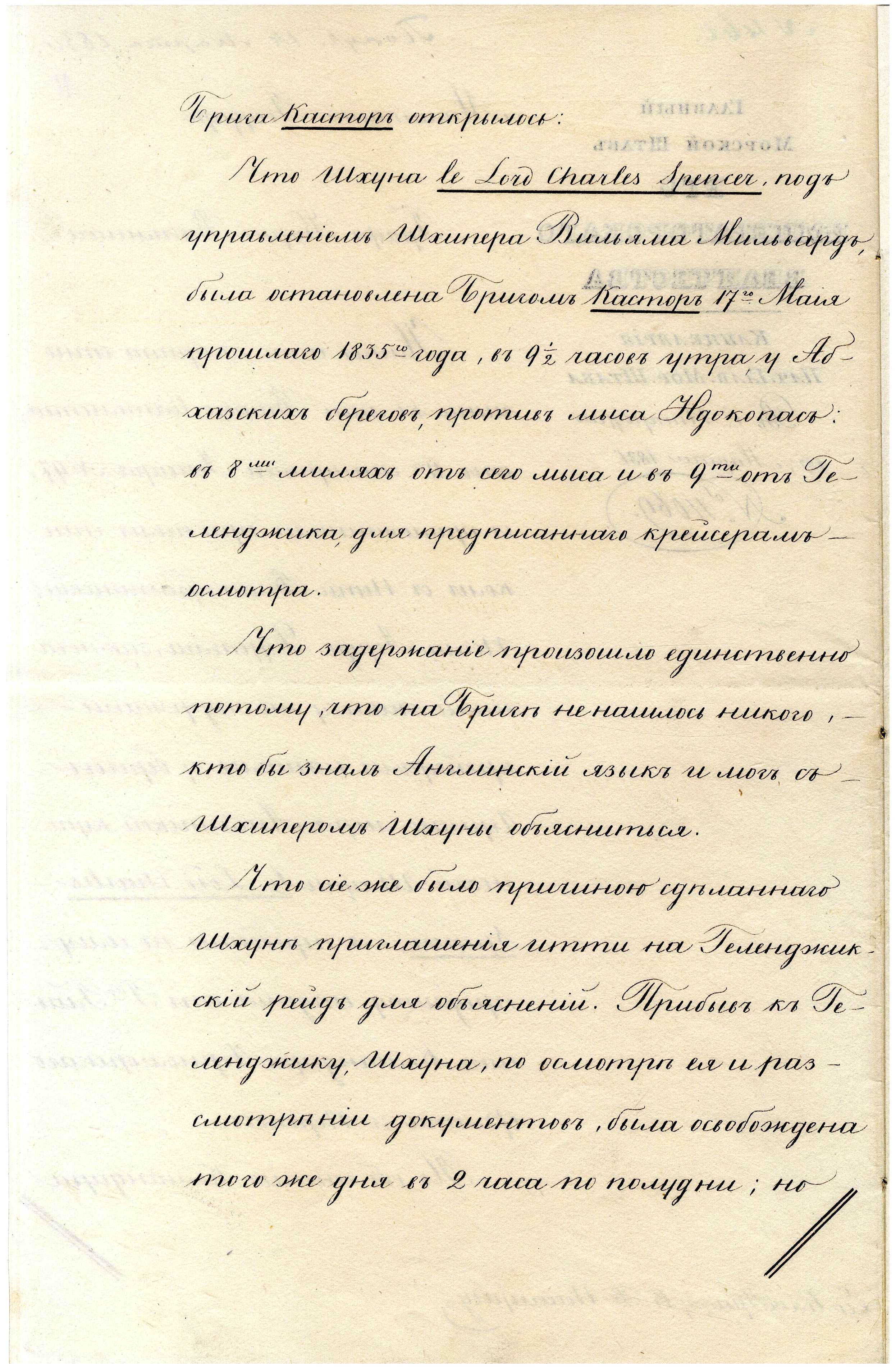
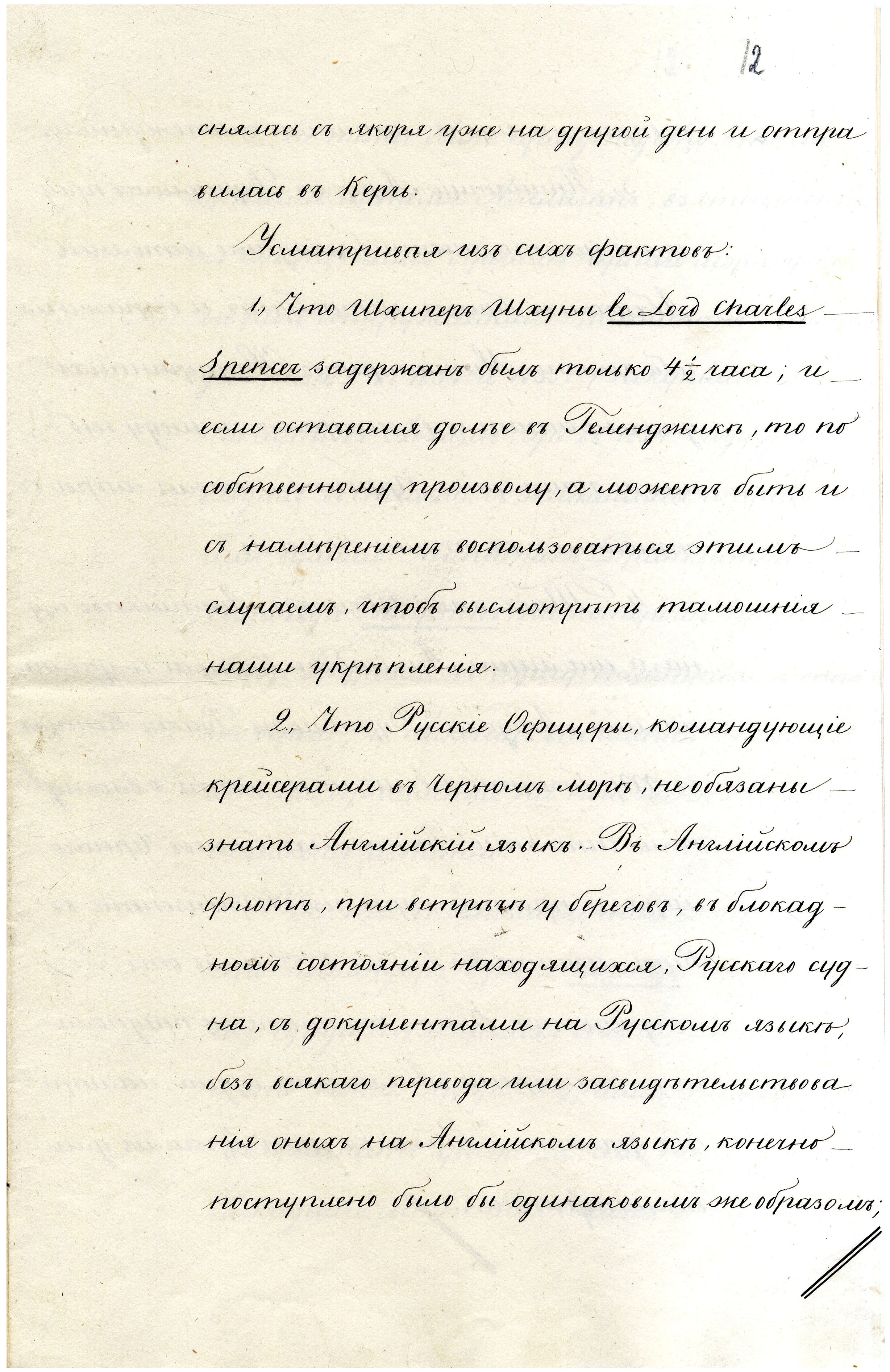
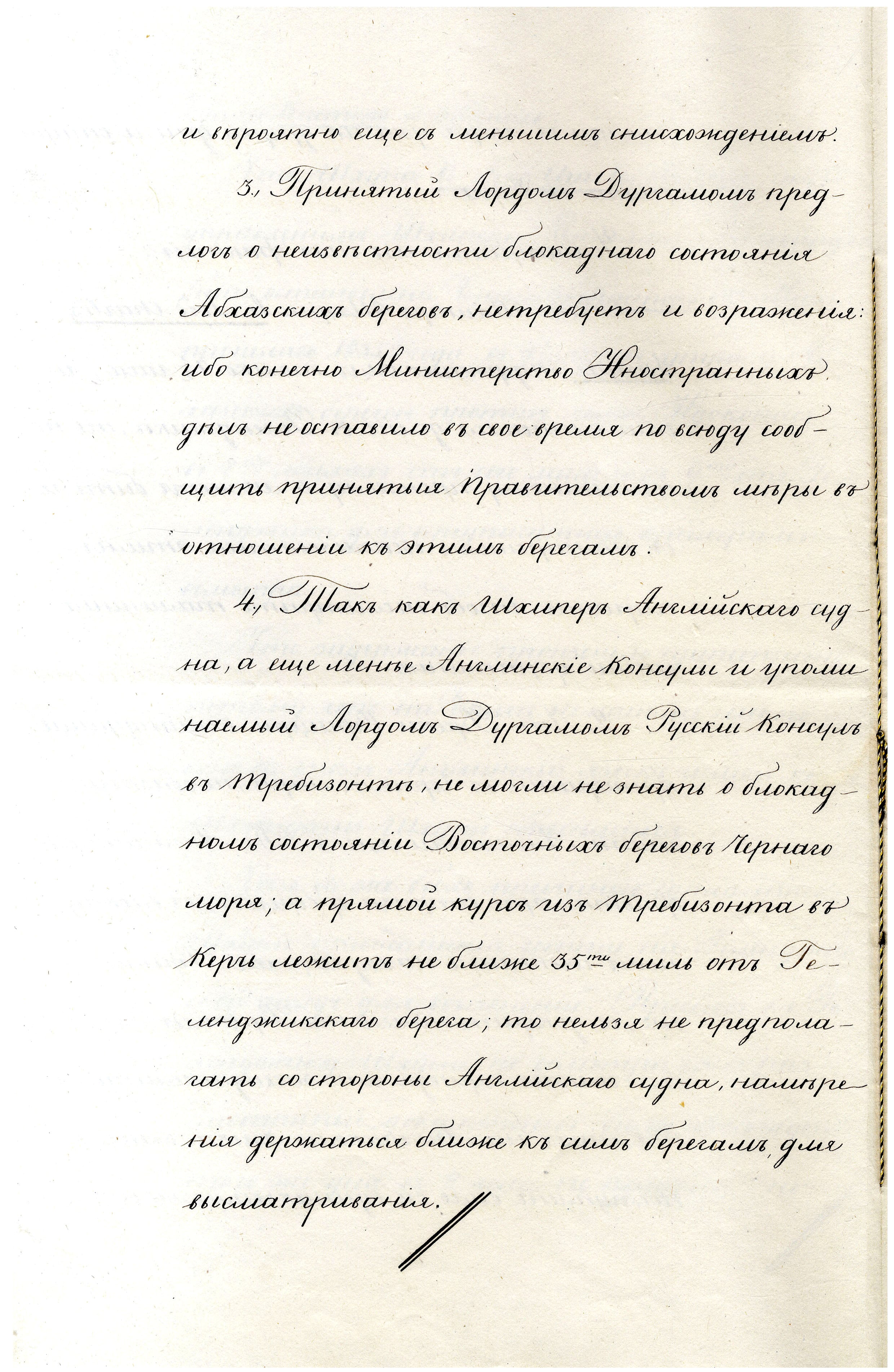
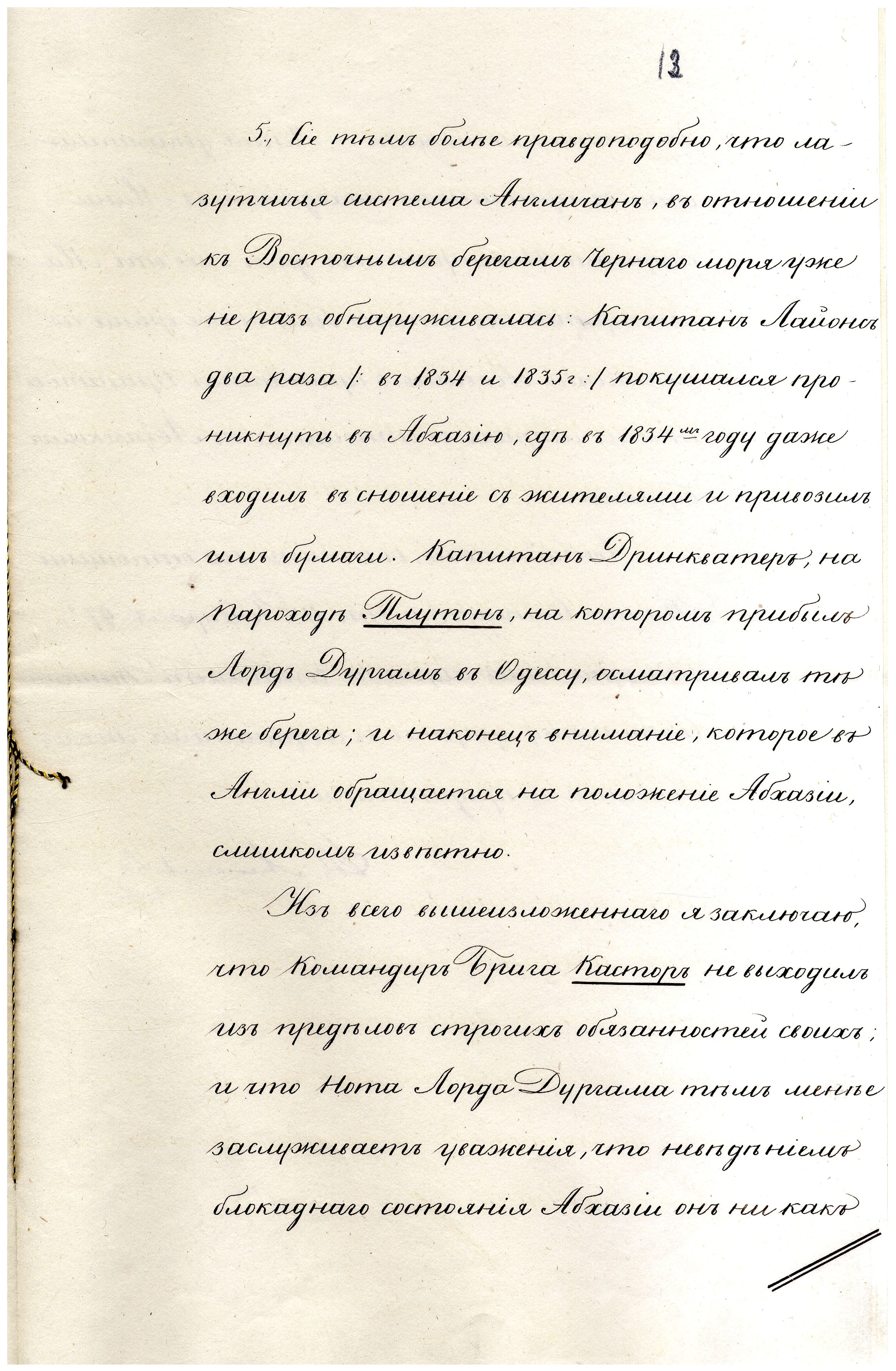
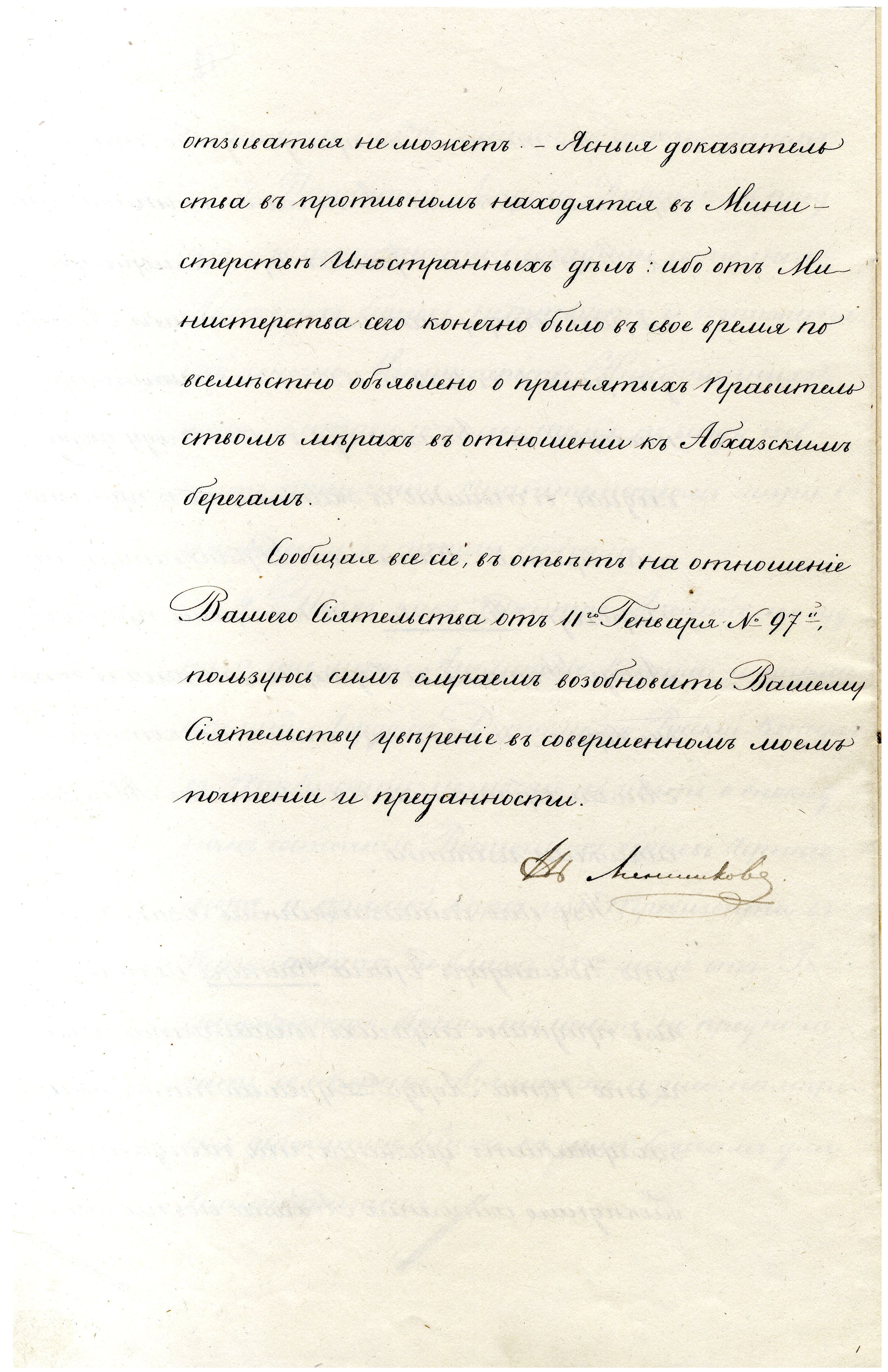
Communication from A. S. Menshikov, Chief of the Main Naval Staff, to Vice-Chancellor K. V. Nesselrode, explaining the detention of the British vessel Lord Charles Spencer in connection with a note of protest from J. Durham, the British ambassador to Russia. 10 March 1836, Archive of the Foreign Policy of the Russian Empire. “The English system of espionage on the eastern shores of the Black Sea has already been exposed more than once: Captain Lyons twice, in 1834 and 1835, attempted to penetrate Abkhazia, where in 1834 he even made contact with the inhabitants and brought them papers. Captain Drinkwater, on the steamship Pluto, which brought Lord Durham to Odessa, inspected the same shores; finally, the attention paid in England to the situation in Abkhazia is all too well known.”
Communication from A. S. Menshikov, Chief of the Main Naval Staff, to Vice-Chancellor K. V. Nesselrode, explaining the detention of the British vessel Lord Charles Spencer in connection with a note of protest from J. Durham, the British ambassador to Russia. 10 March 1836, Archive of the Foreign Policy of the Russian Empire. “The English system of espionage on the eastern shores of the Black Sea has already been exposed more than once: Captain Lyons twice, in 1834 and 1835, attempted to penetrate Abkhazia, where in 1834 he even made contact with the inhabitants and brought them papers. Captain Drinkwater, on the steamship Pluto, which brought Lord Durham to Odessa, inspected the same shores; finally, the attention paid in England to the situation in Abkhazia is all too well known.”
Communication from A. S. Menshikov, Chief of the Main Naval Staff, to Vice-Chancellor K. V. Nesselrode, explaining the detention of the British vessel Lord Charles Spencer in connection with a note of protest from J. Durham, the British ambassador to Russia. 10 March 1836, Archive of the Foreign Policy of the Russian Empire. “The English system of espionage on the eastern shores of the Black Sea has already been exposed more than once: Captain Lyons twice, in 1834 and 1835, attempted to penetrate Abkhazia, where in 1834 he even made contact with the inhabitants and brought them papers. Captain Drinkwater, on the steamship Pluto, which brought Lord Durham to Odessa, inspected the same shores; finally, the attention paid in England to the situation in Abkhazia is all too well known.”
Communication from A. S. Menshikov, Chief of the Main Naval Staff, to Vice-Chancellor K. V. Nesselrode, explaining the detention of the British vessel Lord Charles Spencer in connection with a note of protest from J. Durham, the British ambassador to Russia. 10 March 1836, Archive of the Foreign Policy of the Russian Empire. “The English system of espionage on the eastern shores of the Black Sea has already been exposed more than once: Captain Lyons twice, in 1834 and 1835, attempted to penetrate Abkhazia, where in 1834 he even made contact with the inhabitants and brought them papers. Captain Drinkwater, on the steamship Pluto, which brought Lord Durham to Odessa, inspected the same shores; finally, the attention paid in England to the situation in Abkhazia is all too well known.”
Communication from A. S. Menshikov, Chief of the Main Naval Staff, to Vice-Chancellor K. V. Nesselrode, explaining the detention of the British vessel Lord Charles Spencer in connection with a note of protest from J. Durham, the British ambassador to Russia. 10 March 1836, Archive of the Foreign Policy of the Russian Empire. “The English system of espionage on the eastern shores of the Black Sea has already been exposed more than once: Captain Lyons twice, in 1834 and 1835, attempted to penetrate Abkhazia, where in 1834 he even made contact with the inhabitants and brought them papers. Captain Drinkwater, on the steamship Pluto, which brought Lord Durham to Odessa, inspected the same shores; finally, the attention paid in England to the situation in Abkhazia is all too well known.”
Communication from A. S. Menshikov, Chief of the Main Naval Staff, to Vice-Chancellor K. V. Nesselrode, explaining the detention of the British vessel Lord Charles Spencer in connection with a note of protest from J. Durham, the British ambassador to Russia. 10 March 1836, Archive of the Foreign Policy of the Russian Empire. “The English system of espionage on the eastern shores of the Black Sea has already been exposed more than once: Captain Lyons twice, in 1834 and 1835, attempted to penetrate Abkhazia, where in 1834 he even made contact with the inhabitants and brought them papers. Captain Drinkwater, on the steamship Pluto, which brought Lord Durham to Odessa, inspected the same shores; finally, the attention paid in England to the situation in Abkhazia is all too well known.”
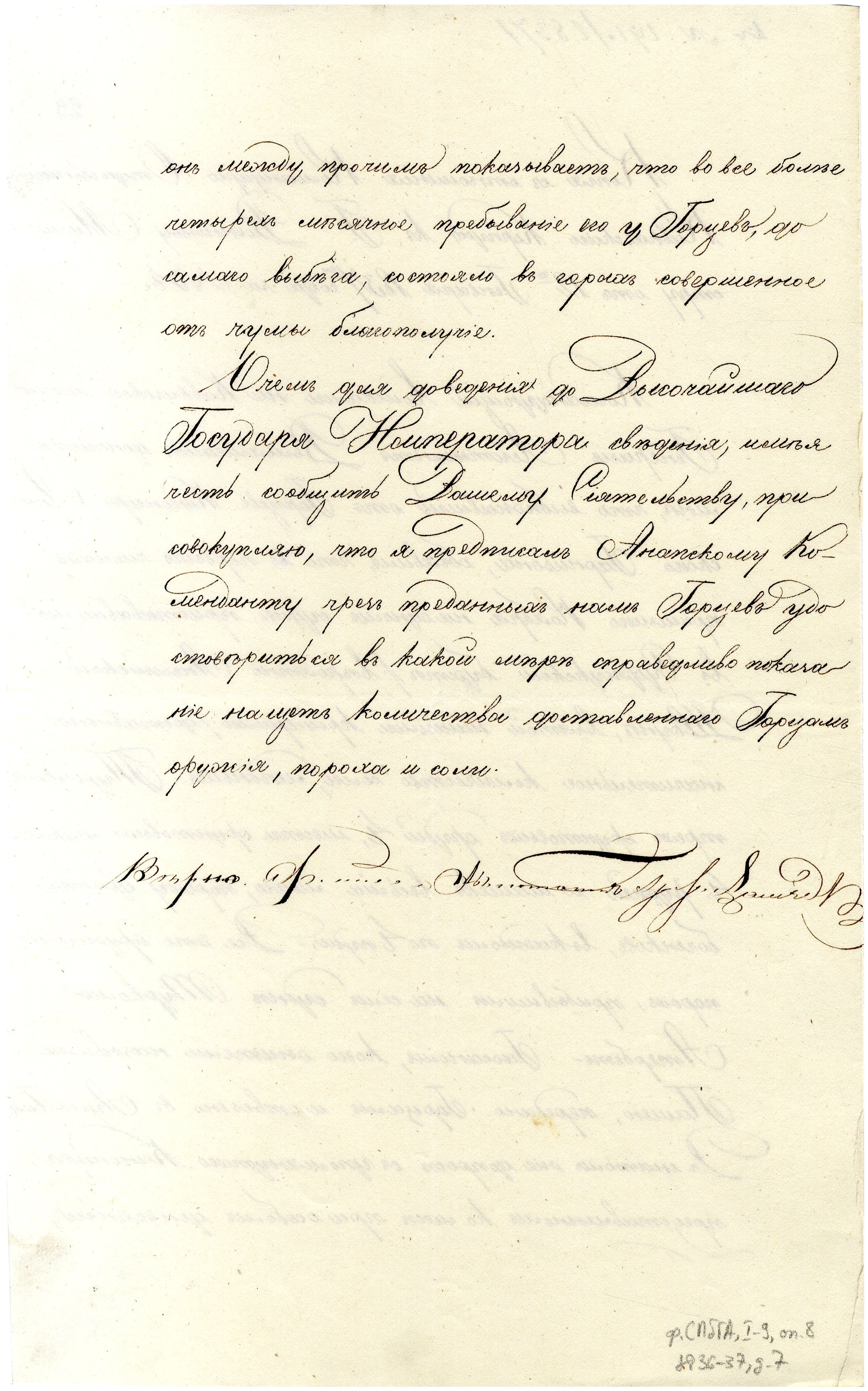
Communication from G. V. Rosen, commander of the Separate Caucasian Corps, to A. I. Chernyshev, Russia's Minister of War, on the delivery of military supplies for the highlanders by a British vessel to Sujuk-Kale Bay. 12 January 1837, Archive of the Foreign Policy of the Russian Empire. “In the first days of last November, a vessel that put into Sujuk Bay, probably the British schooner captured by our cruiser, delivered a considerable quantity of salt, four Turkish three-pounder bronze guns and four six-pounders, a great many rifles and sabres, and two hundred barrels of gunpowder, each containing four poods.”
Communication from G. V. Rosen, commander of the Separate Caucasian Corps, to A. I. Chernyshev, Russia's Minister of War, on the delivery of military supplies for the highlanders by a British vessel to Sujuk-Kale Bay. 12 January 1837, Archive of the Foreign Policy of the Russian Empire. “In the first days of last November, a vessel that put into Sujuk Bay, probably the British schooner captured by our cruiser, delivered a considerable quantity of salt, four Turkish three-pounder bronze guns and four six-pounders, a great many rifles and sabres, and two hundred barrels of gunpowder, each containing four poods.”
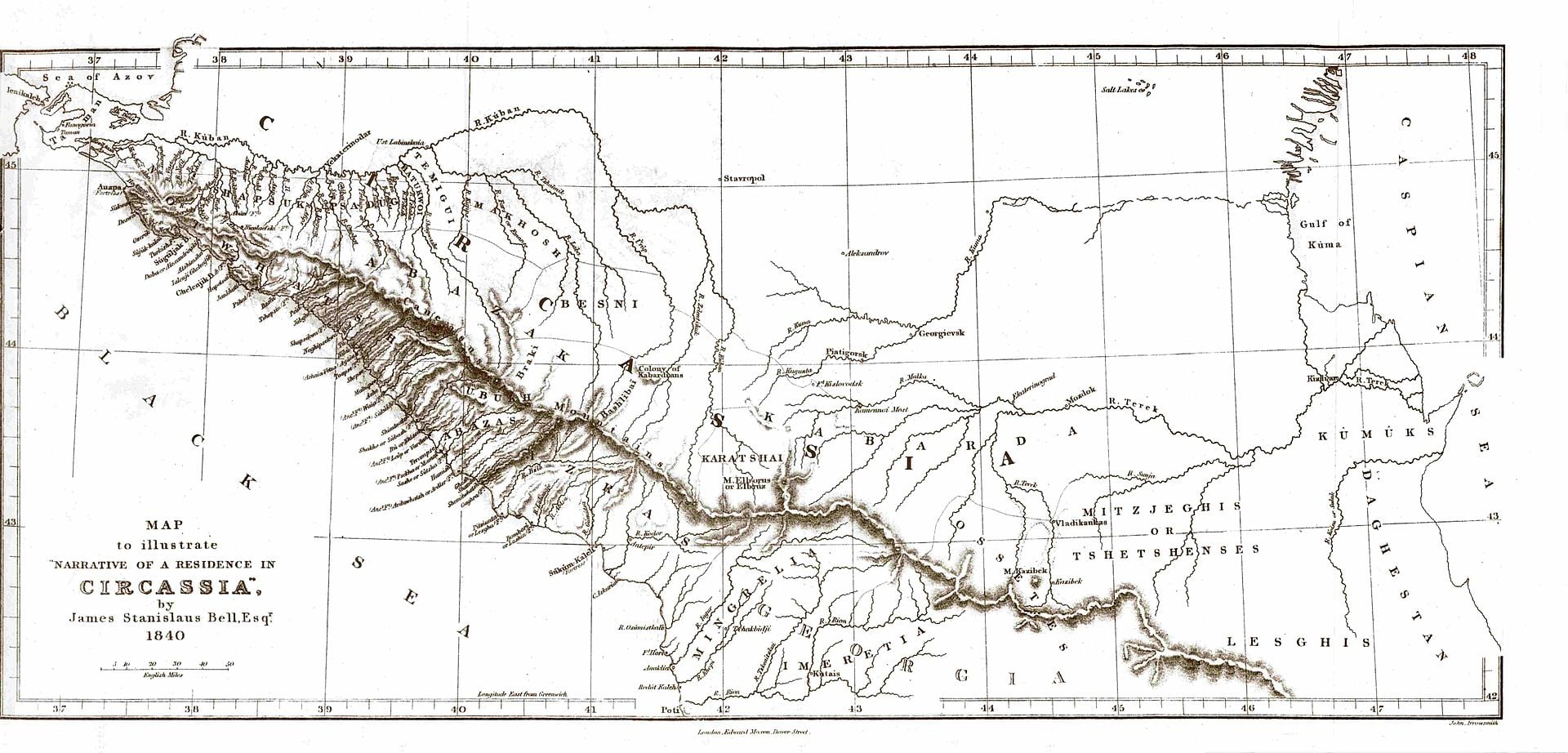
Map of Circassia drawn by James Stanislaus Bell. 1840
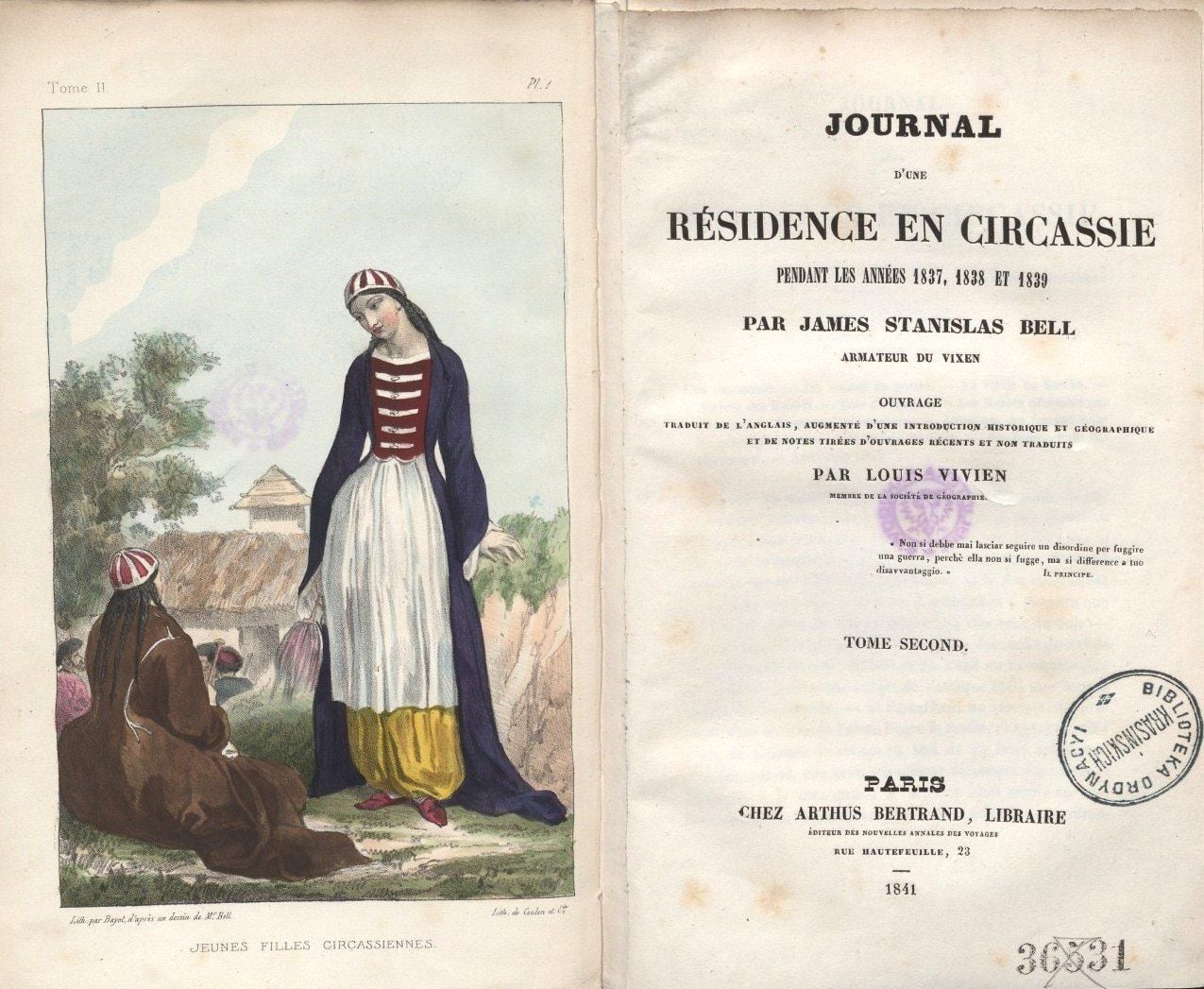
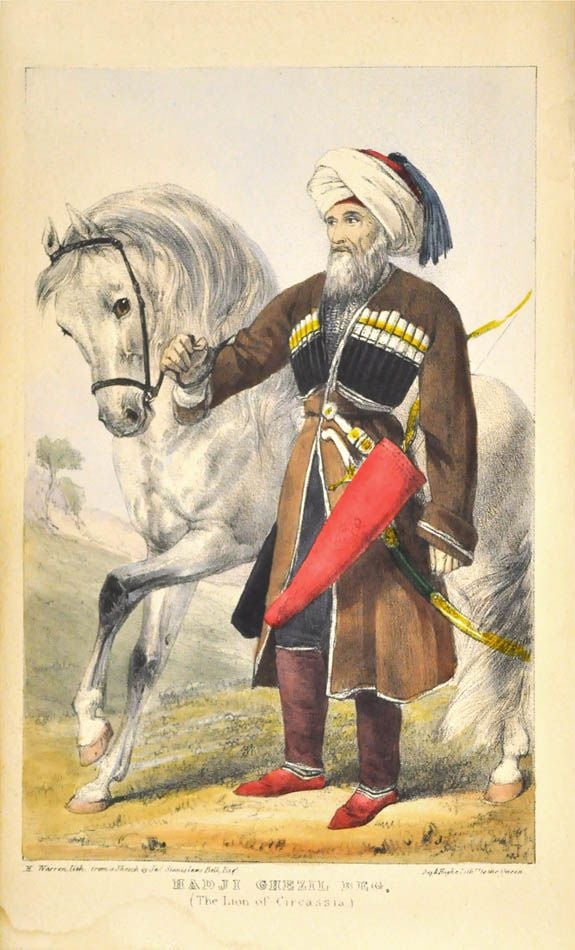
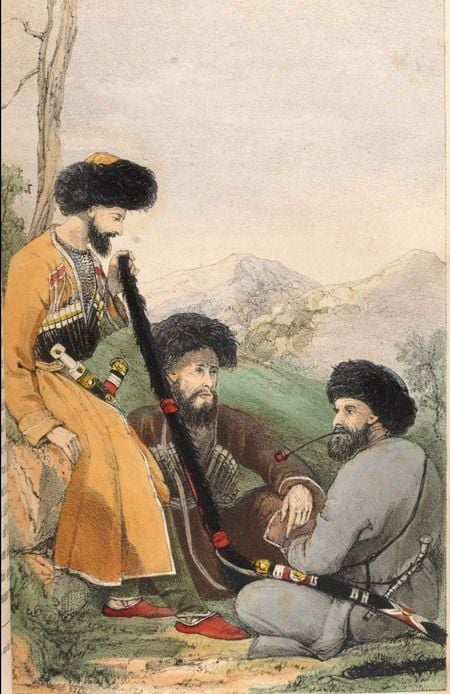
Cover and illustrations from J. S. Bell's book “Journal of a Residence in Circassia during the Years 1837, 1838 and 1839.” London, 1840
Cover and illustrations from J. S. Bell's book “Journal of a Residence in Circassia during the Years 1837, 1838 and 1839.” London, 1840
Cover and illustrations from J. S. Bell's book “Journal of a Residence in Circassia during the Years 1837, 1838 and 1839.” London, 1840
Cover and illustrations from J. S. Bell's book “Journal of a Residence in Circassia during the Years 1837, 1838 and 1839.” London, 1840
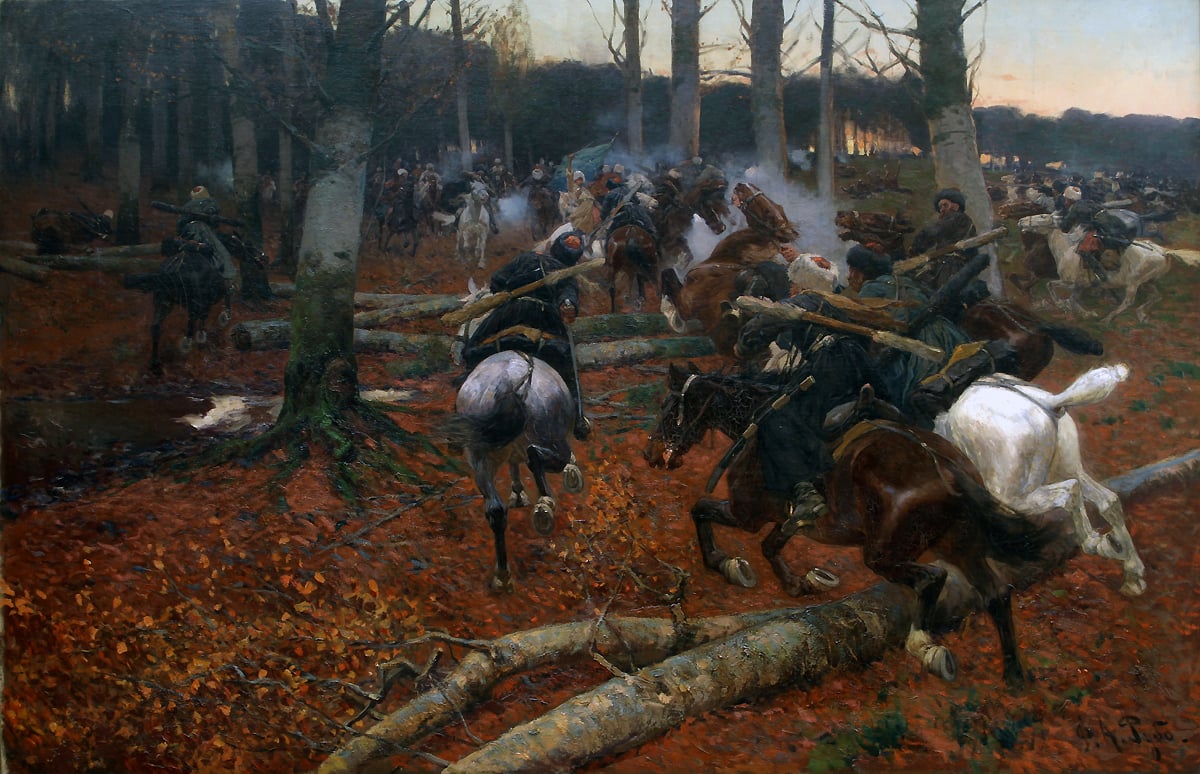
“Reconnaissance in the Caucasus.” Artist: F. Roubaud, circa 1901, Battle of Borodino Panorama Museum
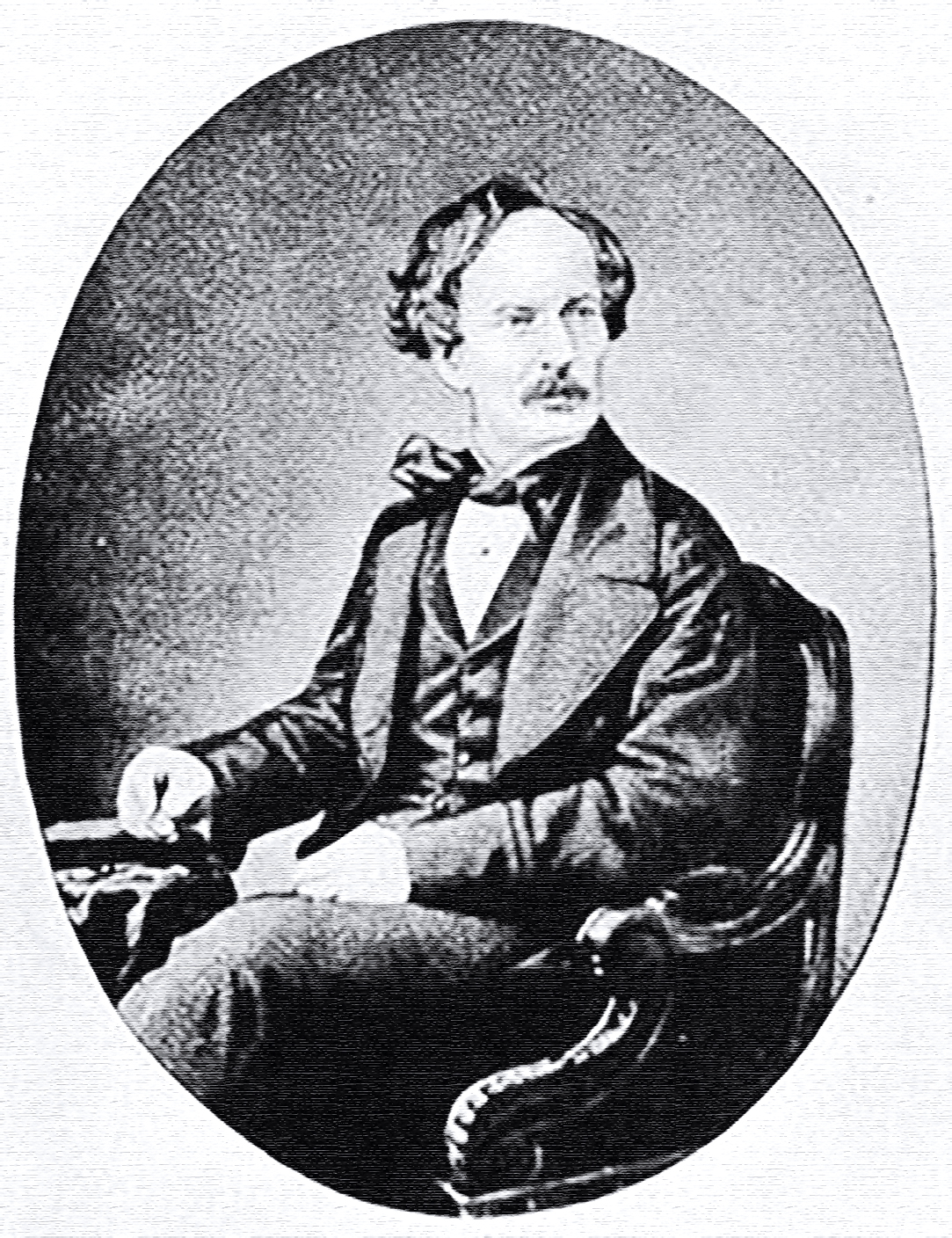
James Stanislaus Bell. Mid-19th century. British adventurer, spy and military agent