Protecting the Sovereignty of the Russian State. History and the Present

War of Shadows

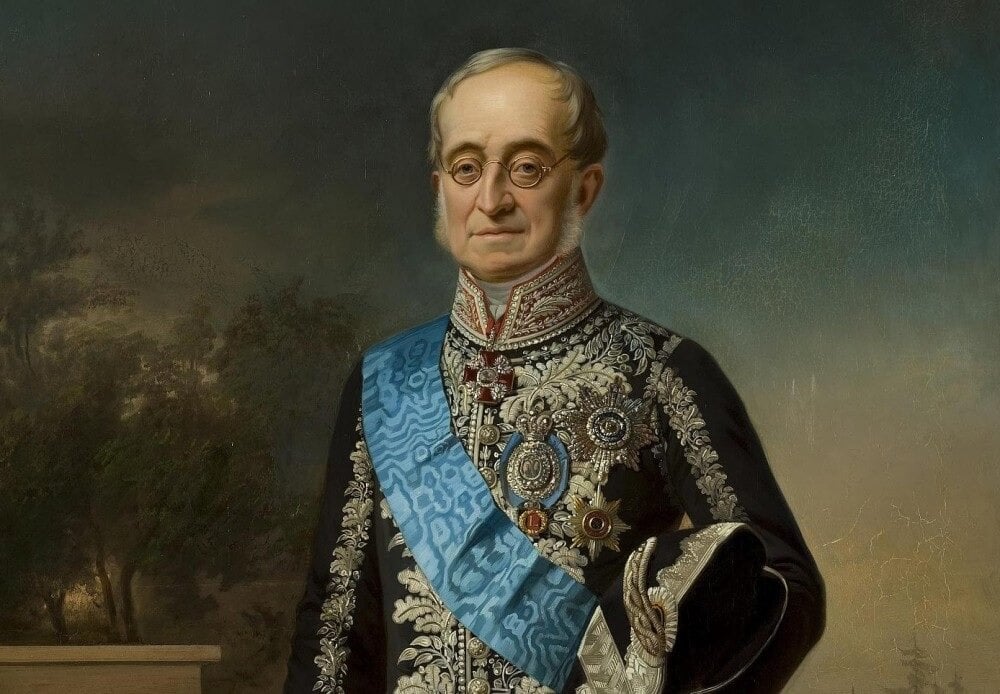
Until the mid-19th century when the “Great Game” between Great Britain and Russia for supremacy in Central Asia began, the Caucasus had been the arena of confrontation between the great powers. The Russian Empire not only had to wage a bloody struggle to retain this mountainous region but also to prevail in the so-called “shadow war” (“das Schattenturnier,” as it was called by the Minister of Foreign Affairs of the Russian Empire, Karl Nesselrode) against the most influential European countries.

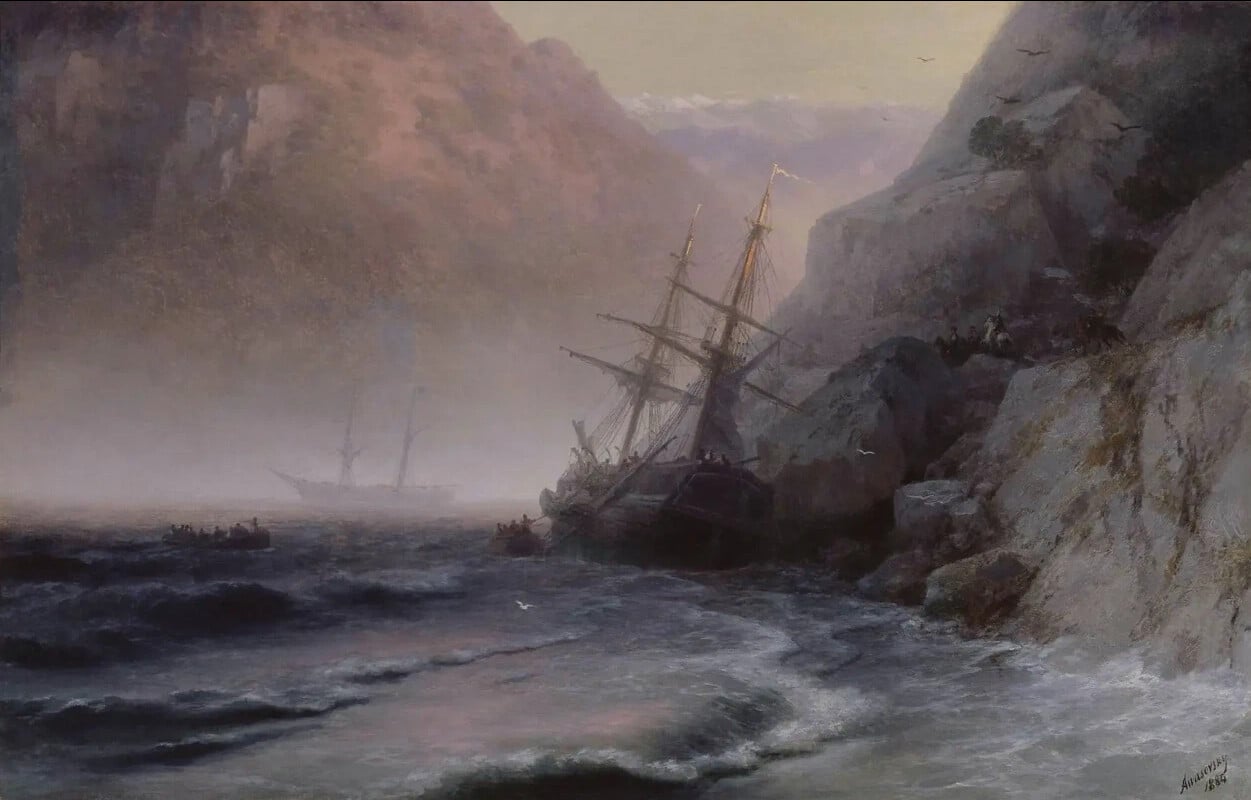
As a result of the Treaty of Adrianople, which concluded the Russo-Turkish War in 1828-1829, the entire Black Sea coast of the Caucasus became part of the Russian Empire. The Ottoman Empire was on the brink of collapse, yet its disappearance from the political map would automatically have meant strengthening of Russia. The British Empire could not tolerate such a threat to its interests. Istanbul, dreaming of revenge, provided military support to individual highlander tribes that continued their struggle against the Russian Empire. Meanwhile, informational support for their cause was supplied from London.

In 1840, British diplomats succeeded in persuading Russia to sign the London Straits Convention, which prohibited the Ottoman Empire from allowing warships to pass through the Bosporus and Dardanelles in peacetime. However, the convention said nothing about wartime. It was precisely this “diplomatic trap” that became the immediate cause of the difficult situation in which the Russian Empire found itself during the Crimean War.

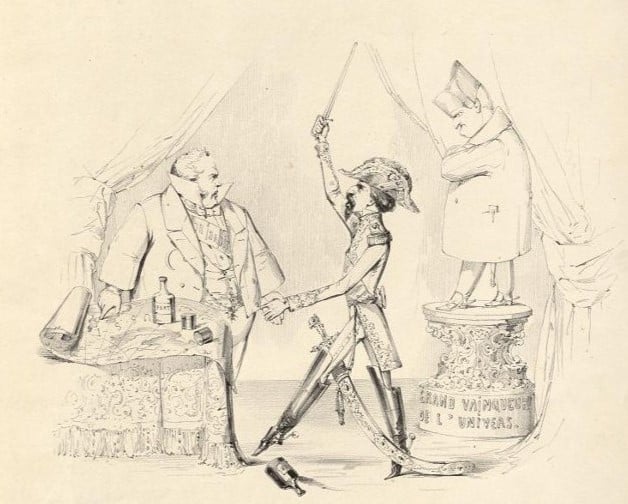
The London Straits Convention was signed on behalf of Great Britain by Foreign Secretary Henry John Temple, 3rd Viscount Palmerston, one of the fiercest and most consistent opponents of Russia’s expansion. His russophobia became so notorious that it was even reflected in a chastushka (a short satirical folk verse) published in the newspaper “Severnaya Pchela” (”The Northern Bee”).
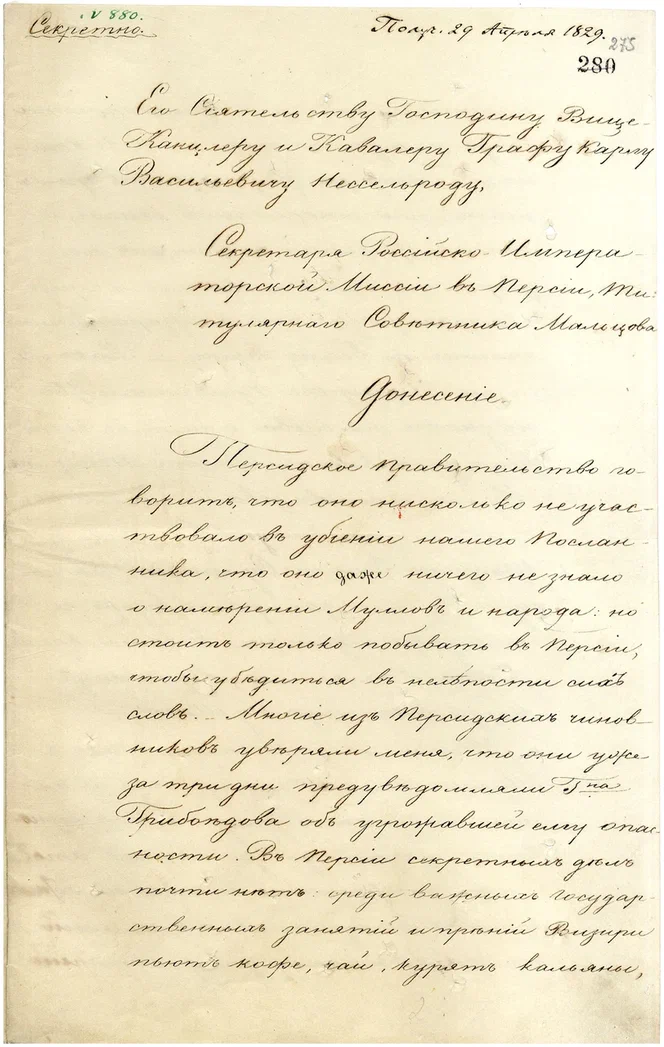
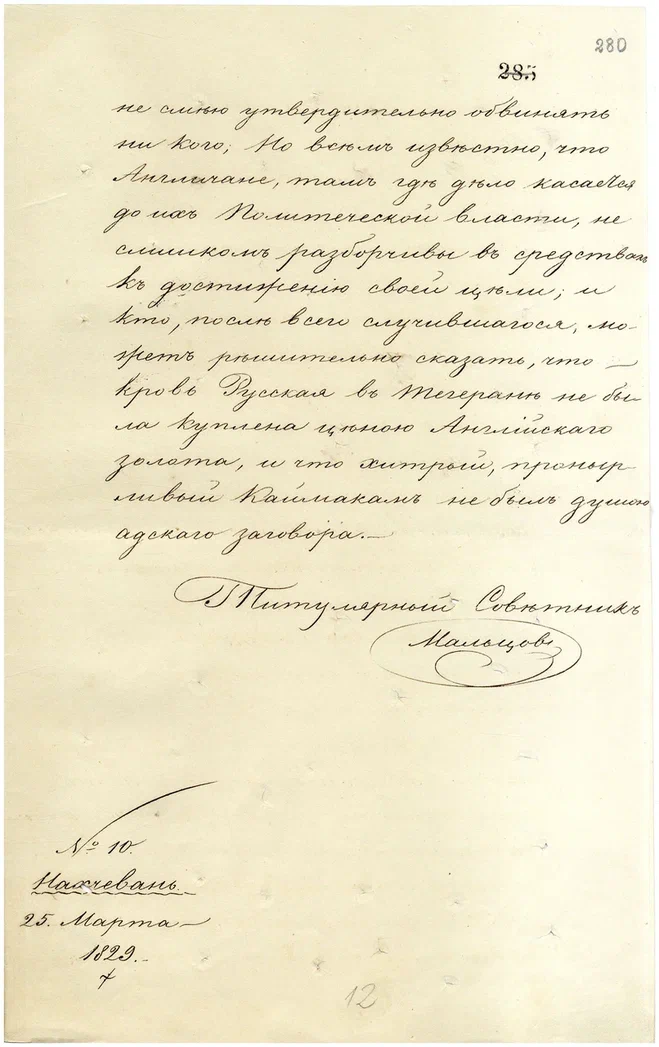
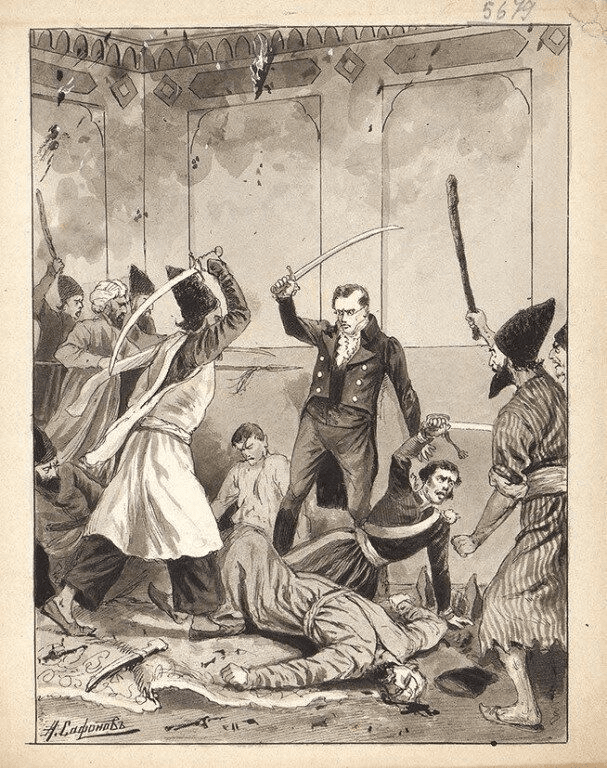
Report from I. S. Maltsov, First Secretary of the Russian Mission in Persia, to Vice-Chancellor K. V. Nesselrode on the reasons for A. S. Griboyedov's death. 25 March 1829, Nakhchivan, Archive of the Foreign Policy of the Russian Empire. “Everyone knows that the English, where their political power is concerned, are not overly scrupulous about the means of achieving their goals; and who, after everything that has happened, can say with certainty that Russian blood in Tehran was not bought with English gold...”
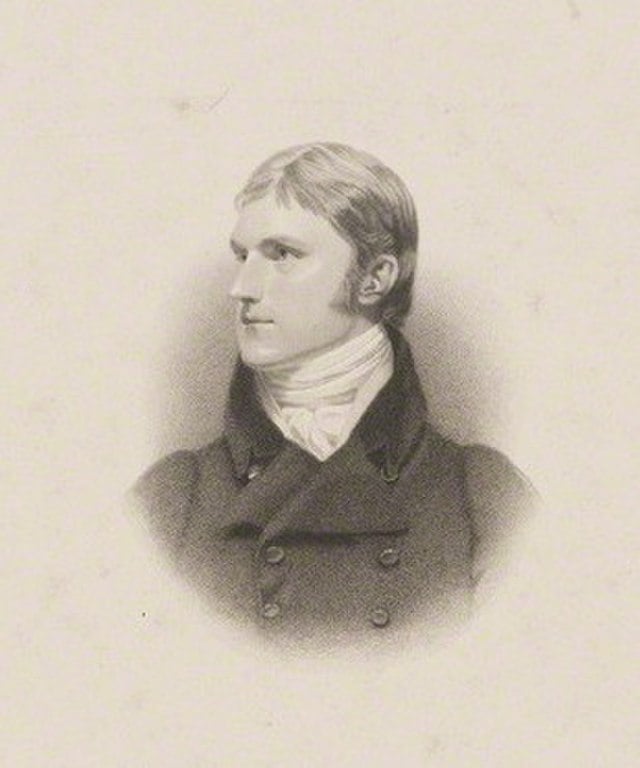
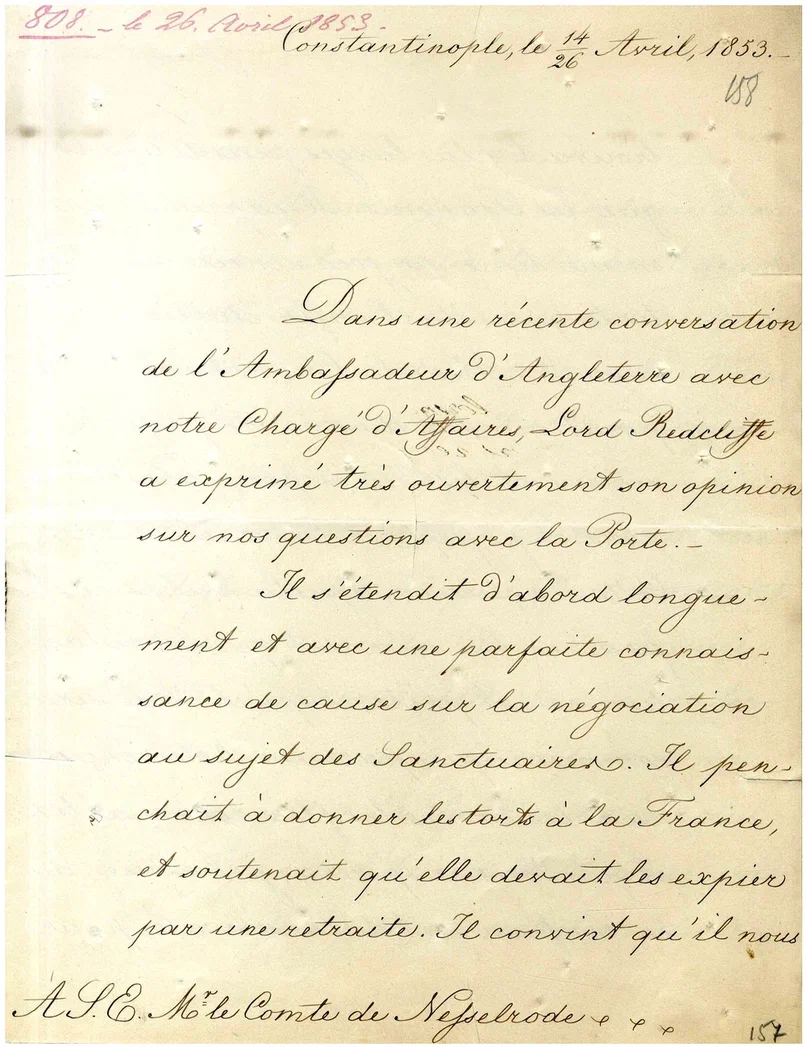
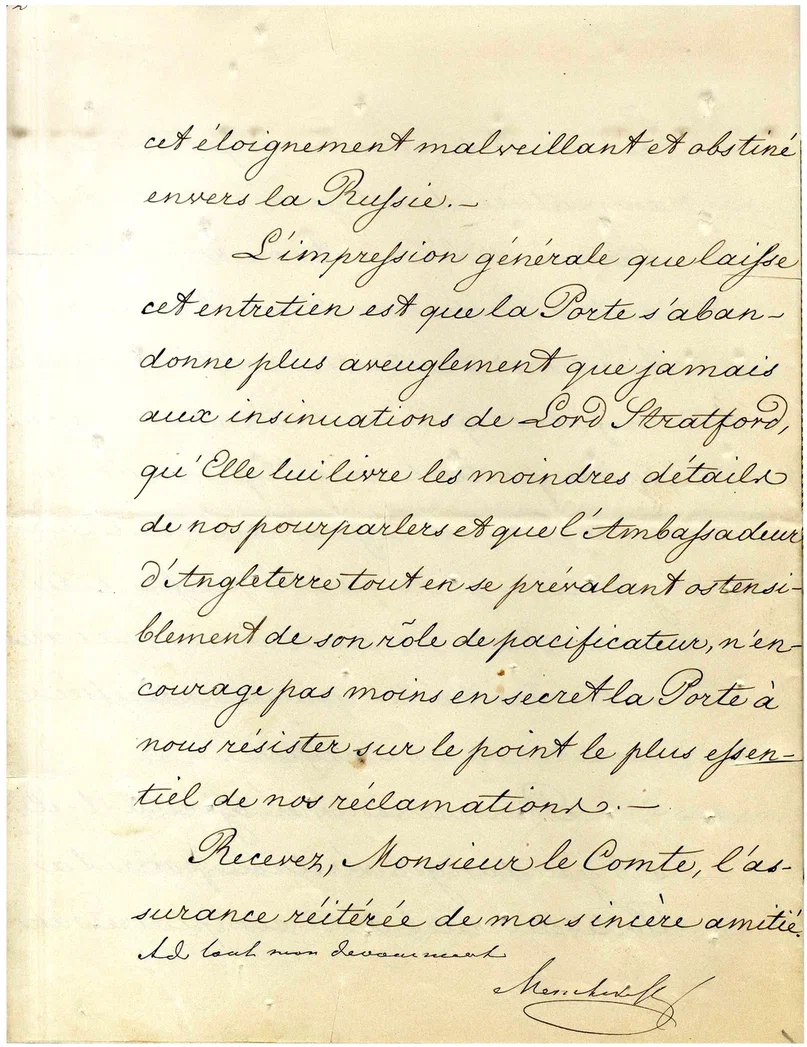
Report from A. S. Menshikov, Ambassador Extraordinary in Constantinople, to Chancellor K. V. Nesselrode about a conversation between A. P. Ozerov, Russia's charge d'affaires in Turkey, and the British ambassador Stratford de Redcliffe. 1853, Istanbul, Archive of the Foreign Policy of the Russian Empire. “The Porte, more than ever, is blindly devoted to Lord Stratford's suggestions... Turkish ministers inform him of the smallest details of our negotiations... the British ambassador, openly assuming the role of peacemaker, secretly encourages Turkey to resist us on the most important of our demands.”
Palmerston and Napoleon III. Caricature “On the Present War.” Artist: P. M. Boklevsky, 1855, State Historical Museum
Smugglers. Artist: I. K. Aivazovsky, 1884, Perm Art Gallery
Karl Nesselrode. Artist: F. Kruger, second half of the 19th century, State Hermitage Museum
The murder of A. S. Griboyedov. Artist: A. Safonov, second half of the 20th century
Stratford Canning, Viscount Stratford de Redcliffe. Engraver: S. Lane-Poole, 1888. Stratford de Redcliffe was one of Britain's most experienced and dangerous specialists on Russia. In 1832, Nicholas I refused to receive him in St Petersburg as ambassador, provoking a diplomatic scandal