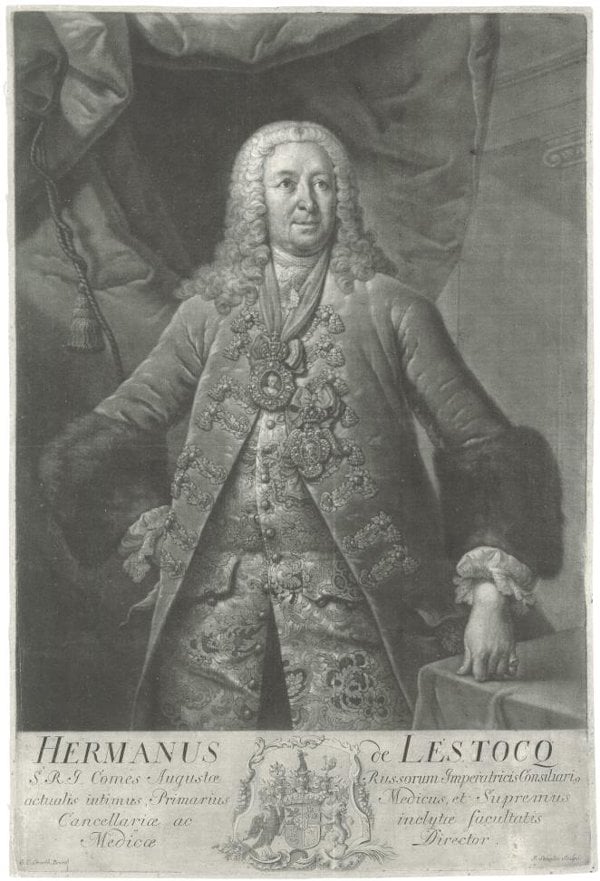
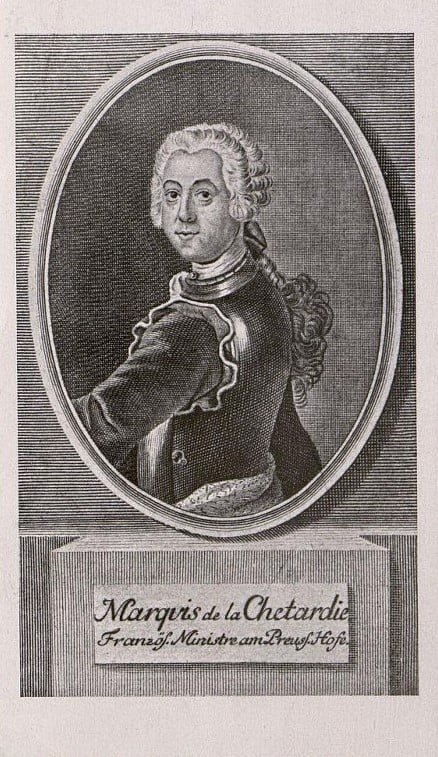
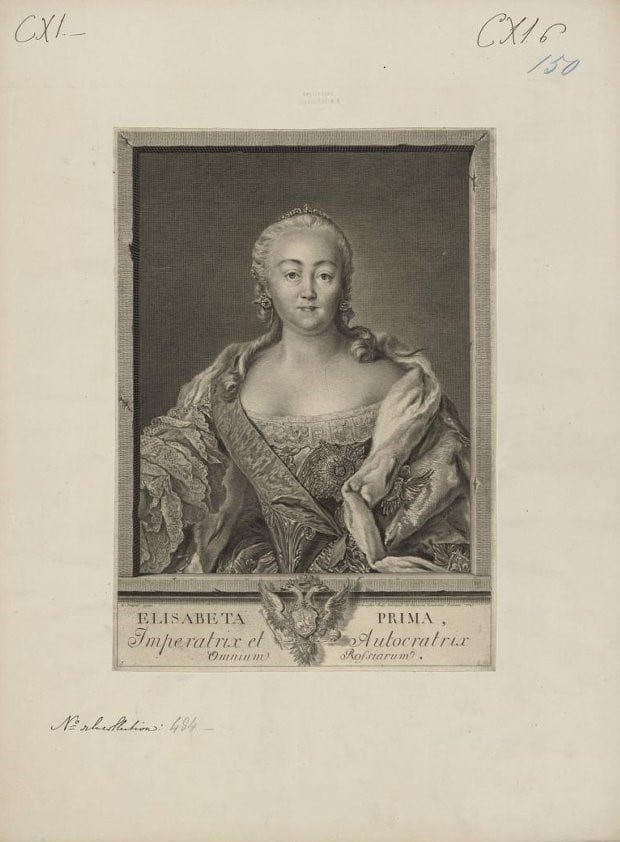
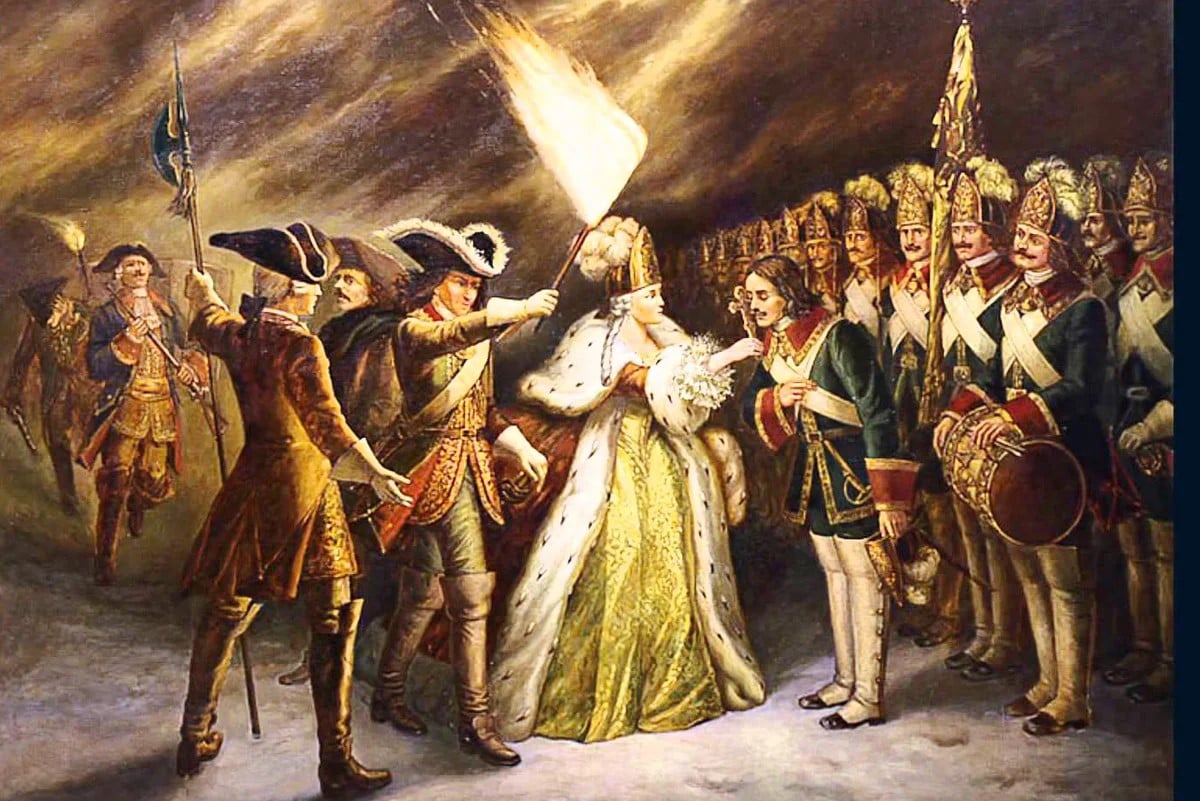
As early as the 19th century a somewhat simplified view on the Battle of the Palaces’ era periodisation had taken shape in the national historiography. The Biron’s era (when, as the historian Vasily Osipovich Klyuchevsky wrote, “German poured into Russia like garbage out of a leaky sack filling the courtyard and swarming around the throne”) was replaced in 1741 with Elizabeth’s bright reign, Peter the Great’s daughter. But a palace coup always has an “ulterior motive”. Two people made a great effort to put Elizabeth Petrovna on the throne: the French ambassador Jacques-Joachim de La Chétardie and the court physician Johann Hermann Lestocq. Through them, in particular, a generous flow of funds was channelled to the guards’ regiments, and the necessary connections were established—without which the coup would hardly have succeeded. Were they driven by concern of the preservation and strengthening of Russia? That can be doubted.
In the report that was sent to the French King, Chetardie unambiguously reveals his intentions:
“I focused on two main points and took advantage of all the trust she was pleased to grant me, in order to convince her: First – The increase of her glory through a preliminary agreement which she needed to have with France, and through that also with Sweden, since the cooperation of such esteemed powers could give more weight to the determination she makes. All of this so that His Majesty and Sweden, In the scenario of a successful outcome would have their share of the credit for it”.
The coup turned out to be Successful, but after all Chetardie failed to achieve his goals. Elizabeth appeared to be a way more independent Ruler, than the ambassador had anticipated. Then, in 1744, After the decryption of intercepted diplomatic mail containing advice on how to manipulate the Empress, Chetardie was expelled from Russia. Yet another attempt of a foreign interference had failed.