Protecting the Sovereignty of the Russian State. History and the Present

«Ideological sabotage»

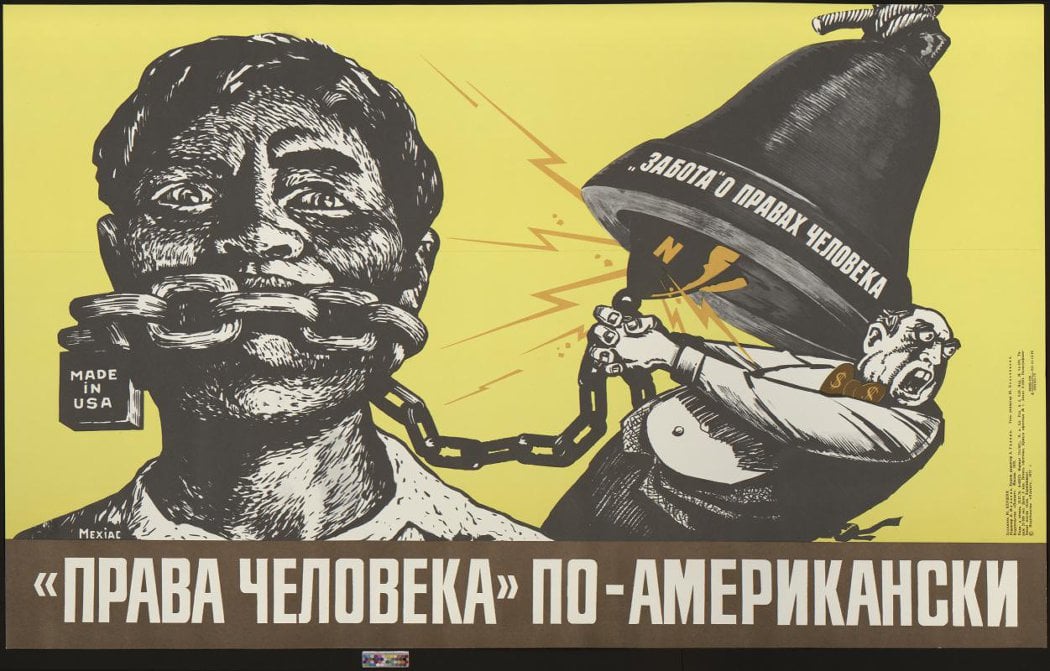
In the 1970s, after the adoption of the détente policy, the Act on the inviolability of the borders of post-war Europe prevented the United States from making the same strenuous efforts to stir up interethnic contradictions in the USSR. Therefore, the West needed new, more subtle instruments of interference in the internal affairs of its geopolitical adversary. One of them was an appeal to human rights. The first step on this path was the creation of the «Coalitions for a Democratic Majority Association» to provide assistance to dissidents from the Eastern Bloc countries. This was followed by the Jackson-Vanik amendment of 1974 (to the U.S. Trade Act), which linked economic preferences in international trade to internal issues of immigration legislation in the USSR and other socialist countries.

Other methods of influence were also being developed. The adversary was well aware of the weak point of Soviet censorship: the prohibition of access to certain information simultaneously increased its subjective value, with the result that «forbidden» books were perceived uncritically.

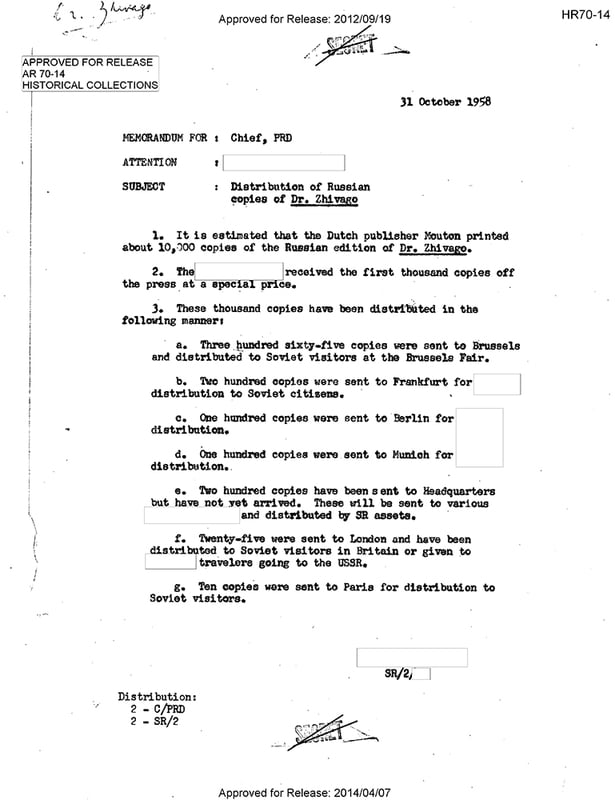
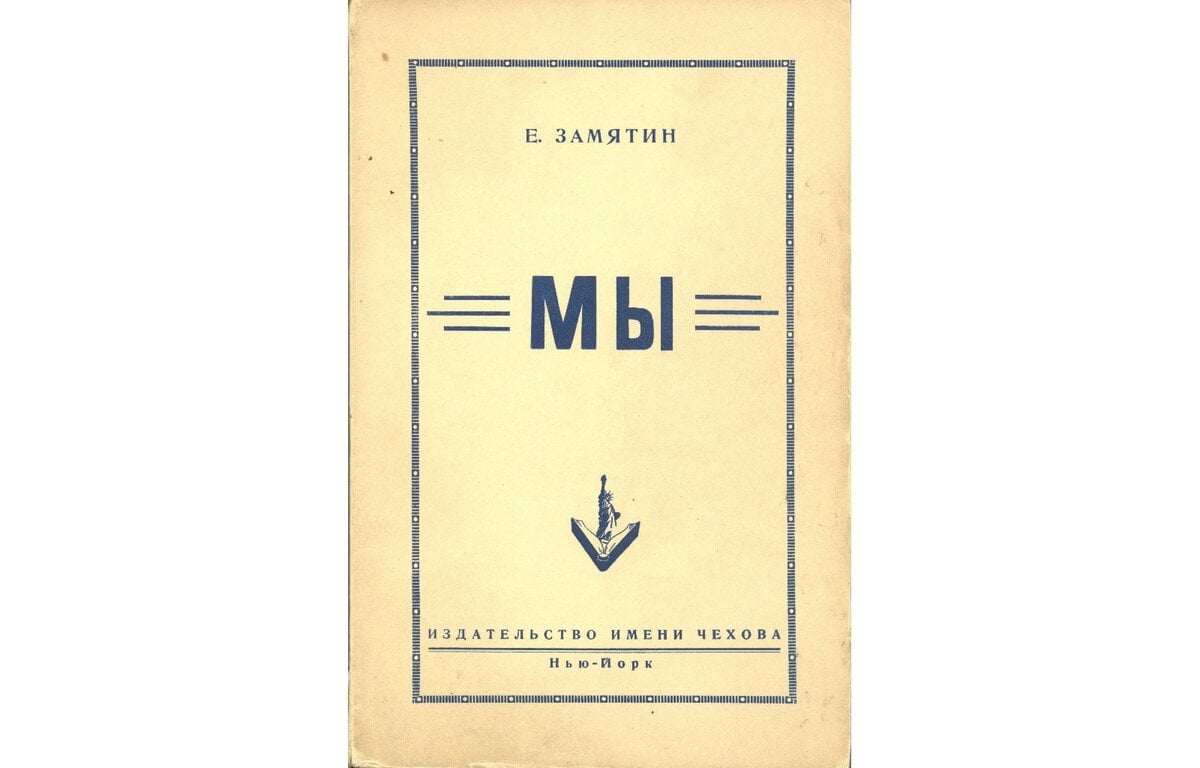
For example, «AEDINOSAUR» operation conducted by the Central Intelligence Agency of the United States was aimed at spreading literary works that were banned in the USSR. By playing on the authors’ vanity and using images from their books, the CIA reshaped the minds and values of the Soviet intelligentsia. «This book has great propaganda value, not only because of its important content and its ability to provoke thought, but also because of the circumstances surrounding its publication: we have a chance to make Soviet citizens wonder what’s wrong with their government if the literary masterpiece of a man who is considered the greatest living Russian writer can’t be read in the original language by his own compatriots in his own homeland» (From the memorandum of the Soviet Russia department of the Central Intelligence Agency of the USA (referring to «Doctor Zhivago», a novel by Boris Pasternak), April 24, 1958. . «The average Soviet citizen could only learn about Nabokov through a chance encounter with a book published by the Chekhov Publishing House, namely «The Gift» (1952), as well as reprints of «Invitation to a Beheading» and «The Defense», which, like many other Russian classics, were published with funding from the CIA. And when Nabokov translated «Lolita» into Russian (in 1967), his books were once again published with financial support from the CIA, and they were already widely circulated in liberal circles. Carl Proffer, «Without Censorship».
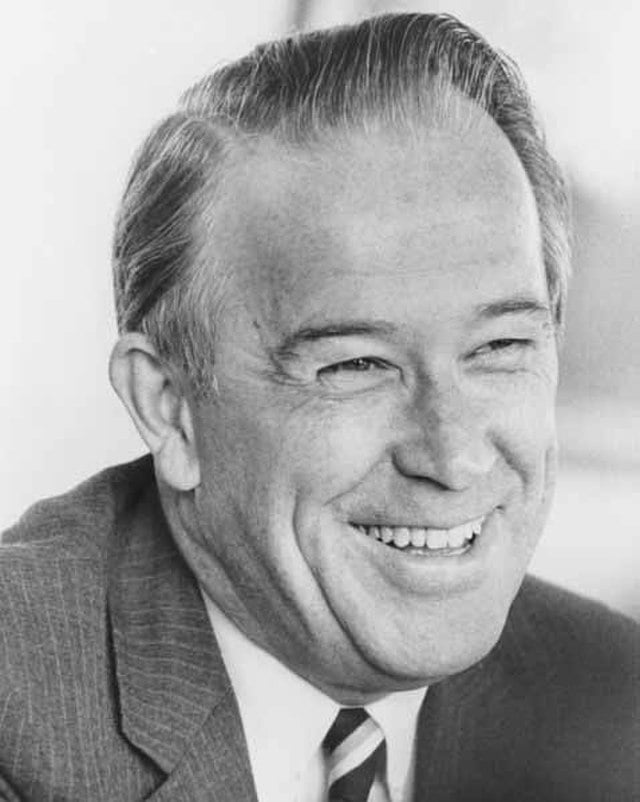
Henry Martin Jackson, a congressman and senator from Washington State continuously from 1941. He had a major influence on the ideology of neoconservatism
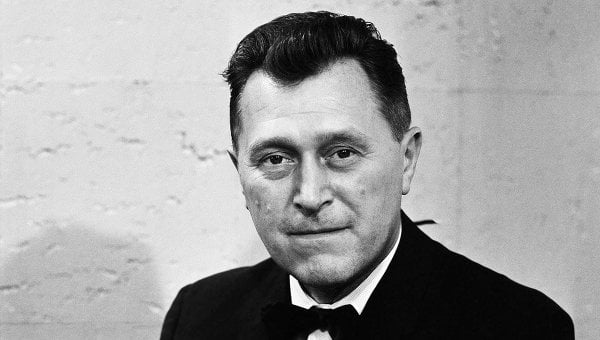
Charles Albert Vanik, American politician and legislator, a member of the House of Representatives
Caricature “Human Rights, American Style.” Artist: Yu. Kershin. 1978
CIA memorandum on the distribution of Russian-language copies of B. Pasternak's novel Doctor Zhivago. 31 October 1958
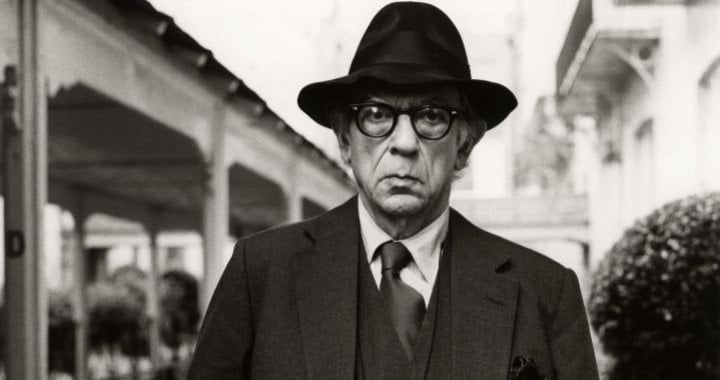
Isaiah Berlin, a career British diplomat and intelligence officer. Having access to Leningrad's literary circles, he encouraged B. Pasternak to continue working on Doctor Zhivago, then sent the manuscript abroad and persuaded the CIA to publish and distribute it
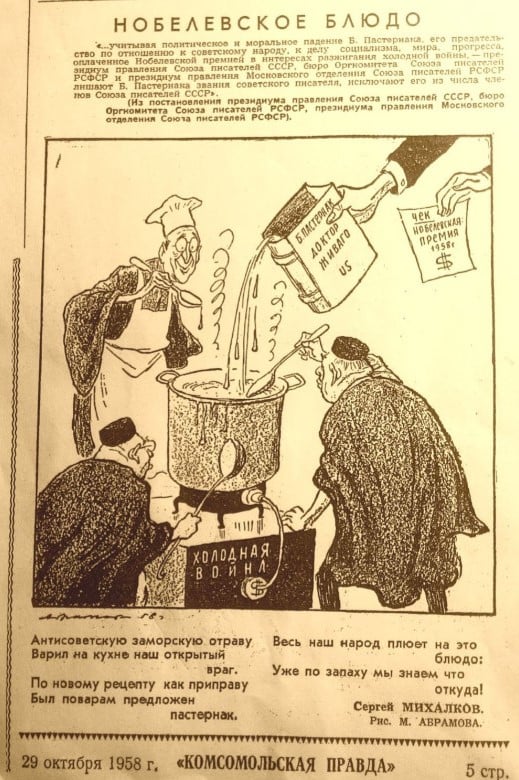
“The Nobel Dish.” A caricature on the award of the Nobel Prize in Literature to B. Pasternak in Komsomolskaya Pravda, 29 October 1958
Carl Proffer, American Slavist, literary scholar, translator and publisher. Founder of Ardis Publishing, which published Russian-language literature banned in the USSR. In 1979, Proffer was barred from entering the Soviet Union
Joseph Brodsky and Ellendea Proffer (C. Proffer's wife). Leningrad, 1970
George Kennan, American diplomat and Sovietologist, an ideologist of the doctrine of “containment” of the USSR. Founder of Chekhov Publishing House (1952–1956), which distributed anti-Soviet literature in Russian
Cover of Y. Zamyatin's novel We, published by Chekhov Publishing House