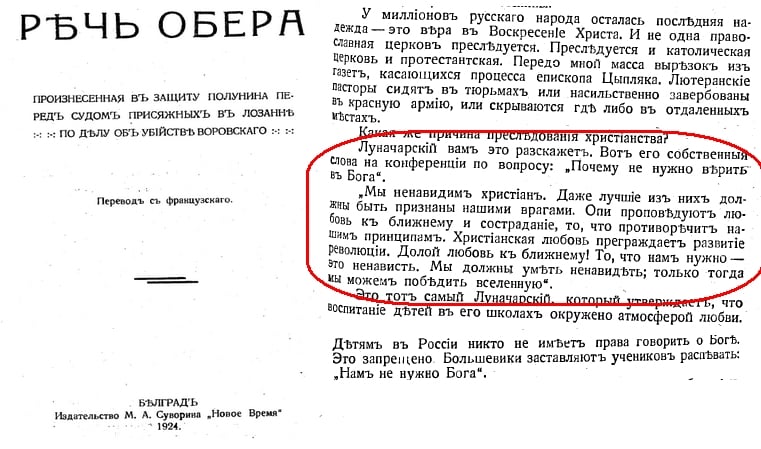
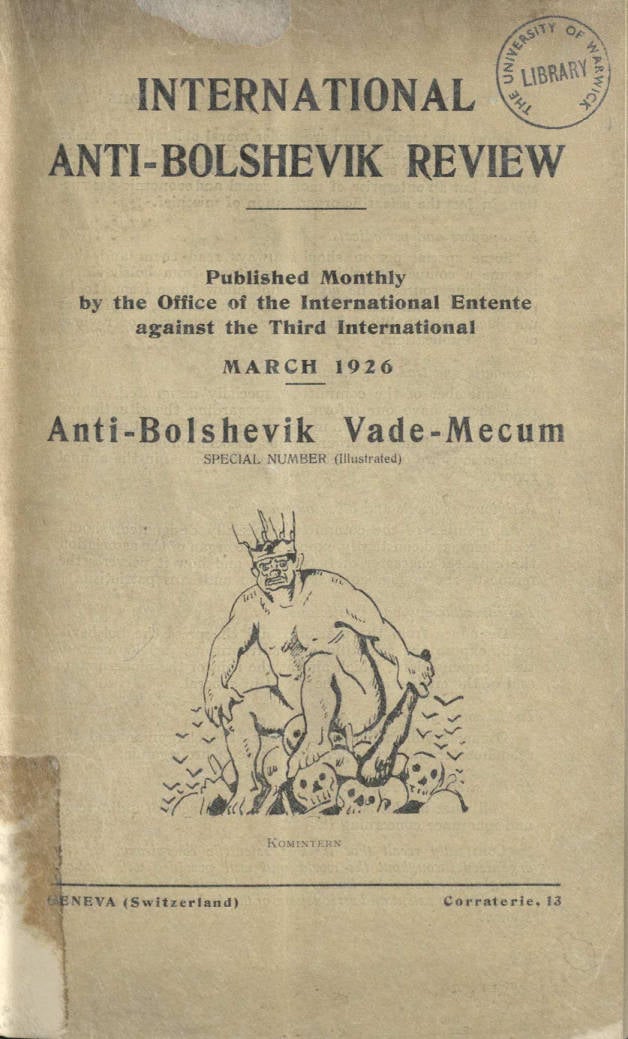
In November 1923, a court in Lausanne, Switzerland, acquitted the White émigrés Arkady Polunin and Maurice Conradi, who had assassinated one of the first Soviet ambassadors, Vatslav Vorovsky. The jury deemed this act an act of retribution. A crucial role in this high-profile trial was played by the defense attorney, the Swiss lawyer Théodore Aubert. A year later, he founded the “International Entente Against the Third International,” which united, among others, émigrés from Russia.
The International Anticommunist Entente actively engaged in open-source intelligence, published literature, and organised anti-Soviet exhibitions. In March 1929, an expanded meeting of the Permanent Secretariat of the Russian Section of The International Anticommunist Entente took place, with the participation of local representatives. At this meeting, the following tasks were set: to establish contacts with Russia in order to support anti-Bolshevik forces within the country and to ensure their merger with foreign activists within the common framework of the “Russian liberation movement.”
The émigré movement was called upon to provide moral and material support to the anti-Bolshevik forces that remained in the USSR. This support was understood as “informing the population of Russia about the true situation in the West, the growing anti-Bolshevik sentiments, the readiness of the active part of the emigration — which considers itself an integral part of the Russian people — to take an active part in the struggle for the liberation of the homeland, and the absence on its part of any hostility toward those who remained in Russia and were forced by circumstances to serve the Soviet authorities.”
Speakers at the meeting raised the idea of recruiting Soviet officials and specialists (usually those who traveled abroad on business trips) for subsequent use as agents of foreign intelligence services.